The S&P 500
102 bullish · 45 bearish · 25 neutral · 1 mixed · exact words, dated and sourced






 +76
+76Where does the index end the year? Targets and earnings math, with the drawdown warnings that come attached.
The count, last 30 days: 29 bullish, 15 bearish. The tape leans bullish. A count, not a verdict.
The tape vs the talk
The line is S&P 500, last 90 days. Each dot is a claim as it landed on the tape: filled is bullish, outlined is bearish. Tap a dot to read it. Where the tape went after is context, not a verdict.
The tape
Jul 27
Aug 03
Aug 10
Aug 17
Aug 31
Sep 07
bullishbearishclaims filed per week
Where the numbers land
What the people who move markets are saying about this, in their own words. These are views on the record, not scored bets: when a call here grows a number and a deadline, it moves to the scoreboard. Newest first.
Bullish
Deepak Mehra says a 10-year yield above 5% will not trigger a real equity pullback because earnings growth is the strongest in five and a half years; equities are on their own trip.
I think the general belief is that if 10 year treasury yields goes beyond 5 percent we'll have a real pullback in equities. I don't believe that because there are counter factors which is essentially earnings growth which has been so robust.
Neutral
Jack Caffrey tells the anchor that with ~28% earnings growth but only ~4-4.5% dividend growth, dividends barely keep pace with inflation and shareholders become reliant on credit markets.
But I do think when you look at a context of 28 percent earnings worth this year and a four percent dividend growth rate, four and a half percent growth in dividends, A, your dividends are barely keeping up with inflation.
Bearish
Jack Caffrey tells the anchor rising and accelerating rates make things trickier and the S&P 500 may have a hiccup or two over the next few months.
It becomes a little bit trickier. And I think that's where we may have a hiccup or two over the next few months.
Bearish
McGlone tells Lin the 2026 midterm year will be contentious and, like 2018 and 2022, bad for the S&P 500 (volatility season).
this is going to be a very contentious midterm election year, last two midterm election years. Markets were down 2018, 2022
Bearish
McGlone tells Lin the S&P 500 versus GDP (Buffett indicator) is at its highest year-end reading since 1928 and something has to give.
you see the SMP 500 versus Warren Buffett's model versus GDP. It's the highest on a year and basis for 1928. So my point is something's going to give here.
Bearish
McGlone tells Lin that over the long run a basket of stocks beats gold, but at today's valuations you do not want to buy the stock market.
In the long term, you're much better off holding a basket of S&P 500 or stocks than gold. The problem is now, you just don't wanna buy the stock market.
Neutral
McGlone tells Lin that with market cap at 2.5 times GDP a 10% correction equals 25% of GDP, which is why a normal pullback would be severely deflationary.
And it's like, when you're 2.5 times GDP, that means if you correct 10%, that's 25% of the global, of the US economy, that's pretty severe.
Bullish
Tom Lee tells Wealthion's Maggie Lake he remains very constructive on US stocks for the next 12 months despite speed bumps.
overall I'd say I'm still very constructive for the next 12 months. But there's speed bumps ahead
Bearish
Tom Lee still expects a US equity drawdown later in 2026 (midterms, testing of the Fed, leverage, sentiment).
we started this year expecting some time later this year. So I guess now we're in the later part for there to be a market drawdown
Bullish
Mike Wilson (Morgan Stanley) tells Bloomberg US equities remain in a bull market and the economy is fine despite oil, wars and erratic policy
But we're in a bull market. Okay, let's not ignore that factor. We are in a bull market. Okay, the economy is fine.
S&P 500 since this was said: ▼ -0.6% · 7,636 → 7,592 · as of 2026-09-10
Bearish
Weiss discloses he is short QQQ and VOO and holding cash, acknowledging squeeze risk from a Trump 'close to a deal' headline
i admit to being short some cues and voo and not deploying the cash that i've had
S&P 500 since this was said: ▼ -0.6% · 7,636 → 7,592 · as of 2026-09-10
Bearish
Peter Schiff says the US stock market is very expensive unless the most optimistic AI assumptions come true.
But the market is very expensive unless the most optimistic assumptions about AI end up being true.
S&P 500 since this was said: ▼ -1.1% · 7,674 → 7,592 · as of 2026-09-10
Bearish
Peter Schiff expects US stocks to fall in real (gold) terms while conceding they may not fall in nominal terms because of inflation.
I said US stocks are overpriced. I expect them to fall in real terms. I never really thought that they would go down in nominal terms because I've always believed there'd be a lot of inflation.
S&P 500 since this was said: ▼ -1.1% · 7,674 → 7,592 · as of 2026-09-10
Bullish
Peter Schiff would bet the S&P 500 is higher in nominal terms one year from now, choosing it over cash for the next 12 months despite his real-terms bear view.
The S&P, I would bet it would be higher in a year, nominally.
S&P 500 since this was said: ▼ -1.1% · 7,674 → 7,592 · as of 2026-09-10
Bullish
David Booth (Dimensional) tells Fox Business stocks return about 10% a year over the long haul and investors must stay invested through downturns to get it.
stocks over the long haul have done 10 percent a year. But you got to be there to be assured of getting it.
S&P 500 since this was said: ▼ -1.6% · 7,719 → 7,592 · as of 2026-09-10
Neutral
Rick Bensignor tells CNBC the S&P 500 has stalled at a major technical target despite strong earnings and is stuck for now.
certainly strong earnings we've stalled right up against a major target area
S&P 500 since this was said: ▼ -1.6% · 7,719 → 7,592 · as of 2026-09-10
Bearish
Bensignor would turn worried on the S&P/SPY only on multiple closes under 762.
if we start breaking under 762 on multiple closings I get a little
S&P 500 since this was said: ▼ -1.6% · 7,719 → 7,592 · as of 2026-09-10
Bullish
Stephanie Link (Hightower) tells CNBC earnings growth was broad (10 of 11 sectors grew, 7 double-digit), so investors should not fight the economic momentum.
10 out of 11 sectors saw growth last quarter, this past quarter, seven out of 11 saw double digit growth
S&P 500 since this was said: ▼ -2.0% · 7,745 → 7,592 · as of 2026-09-10
Bullish
Stephanie Link (Hightower) tells CNBC she stays fully invested and expects the market to grind higher into the end of 2026 on roughly 20% earnings growth.
And I think we grind higher into the end of the year because I think earnings may not grow at 50 percent, but they're still going to grow. I think 20.
S&P 500 since this was said: ▼ -2.0% · 7,745 → 7,592 · as of 2026-09-10
Bullish
Julian Emanuel of Evercore tells Bloomberg that despite caution into September, an all-rise phase for Mag7, software and semis will come before the cycle ends.
But we do think you will get all rise before this cycle is over.
S&P 500 since this was said: ▼ -2.5% · 7,786 → 7,592 · as of 2026-09-10
Bearish
Julian Emanuel of Evercore tells Bloomberg index protection is cheap with VIX at 14 and should be bought ahead of the Fed, midterms and Iran.
And so for us, index protection is very inexpensive here.
S&P 500 since this was said: ▼ -2.5% · 7,786 → 7,592 · as of 2026-09-10
Bullish
Stephanie Guild (Robinhood) tells Guy Johnson the Situational Awareness blow-up was a leverage clearing event and, as after LTCM in 1998, US equities can move higher from here.
everyone exits the same door. And that's a clearing event. And I do think we're in that situation.
S&P 500 since this was said: ▼ -2.5% · 7,786 → 7,592 · as of 2026-09-10
Bullish
Stephanie Guild (Robinhood) tells Guy Johnson she agrees markets can rip higher: lingering skepticism and a lower S&P multiple leave room for the rally to continue.
Yeah I mean I agree with that. I still think there's a skepticism in the market and you can kind of see it when you look at like valuations.
S&P 500 since this was said: ▼ -2.5% · 7,786 → 7,592 · as of 2026-09-10
Neutral
Stephanie Guild (Robinhood) tells Guy Johnson that 2026 S&P earnings-growth expectations have doubled while the index multiple has dropped two turns, with 2027 estimates unchanged.
You know you've seen earnings growth expectations double for 2026. And I know we look a little further than that and 2027 hasn't really moved. But you've also seen with the doubling of earnings growth expectations valuations have actually dropped two turns for the S&P anyway.
S&P 500 since this was said: ▼ -2.5% · 7,786 → 7,592 · as of 2026-09-10
Bullish
Adam Farstrup (Schroders) tells CNBC stocks will drive higher, via continued earnings beats (estimates are rising, unusually for this point in the year) or multiple expansion.
So I think to see stocks drive higher, which we think is going to happen
S&P 500 since this was said: ▼ -2.5% · 7,786 → 7,592 · as of 2026-09-10
Neutral
Jurrien Timmer tells Bloomberg's Romaine Bostick that S&P 500 Q2 earnings growth rose from ~25% to 32% during the season and momentum is still very strong.
Started the quarter at about 25 percent or so. It's now at 32 percent. And the momentum is just incredibly strong.
S&P 500 since this was said: ▼ -2.5% · 7,786 → 7,592 · as of 2026-09-10
Neutral
Jurrien Timmer tells Bloomberg the S&P forward P/E is 20 cap-weighted and 18 equal-weighted, with 75% of stocks above their 200-day average.
the forward P on the S&P cap weighted index is 20. On the equal weighted index it's 18. 75 percent of the S&P 500 is in uptrends above their 200 day moving average.
S&P 500 since this was said: ▼ -2.5% · 7,786 → 7,592 · as of 2026-09-10
Bullish
Jurrien Timmer tells Bloomberg that, risks from 4.7% 10-yr yields and AI financing aside, the S&P 500 is a very strong earnings-driven momentum market for now.
There are some risk from rising interest rates in the 10 years at 470. And of course we can talk about risks in A.I. and how that's all being financed and all of that. But for now this is a very strong earnings driven momentum market.
S&P 500 since this was said: ▼ -2.5% · 7,786 → 7,592 · as of 2026-09-10
Bullish
Jurrien Timmer tells Bloomberg that S&P forward multiples are reasonable and trailing P/E in the low-to-mid 20s is not terrible, while conceding a bear would cite CAPE near 34.
So the forward multiples are very reasonable. Even the trailing 12 month numbers are in the low to mid 20. So that's not terrible.
S&P 500 since this was said: ▼ -2.5% · 7,786 → 7,592 · as of 2026-09-10
Neutral
Jurrien Timmer tells Bloomberg that S&P earnings momentum will eventually slow but he does not expect a cliff.
as Romain asks I don't think it's going to be a cliff but it could be a slowdown
S&P 500 since this was said: ▼ -2.5% · 7,786 → 7,592 · as of 2026-09-10
Neutral
Jurrien Timmer tells Bloomberg his two tail risks are S&P concentration (top 10 names at 40%, all AI) and the bond market.
One is the concentration risk in the S&P of the top 10 names being 40 percent. And it's all AI all the time.
S&P 500 since this was said: ▼ -2.5% · 7,786 → 7,592 · as of 2026-09-10
Bullish
Kim Forrest of Bokeh Capital tells Bloomberg the stock market does not care much about GDP and will keep rewarding the AI growth story despite a weak consumer.
The stock market doesn't necessarily really care about GDP all that much. It really doesn't. It's always looking for the next big idea and growth.
S&P 500 since this was said: ▼ -2.5% · 7,786 → 7,592 · as of 2026-09-10
Bearish
Ed Clissold (Ned Davis Research) tells CNBC that with the Fed less in play, the long end matters more, and a 10-year yield near 5% would be a real challenge for equities.
I think it does put the long end of the curve more in play. If we get about 5% of the 10-year, I think that could be a real challenge for the equity markets.
S&P 500 since this was said: ▼ -2.5% · 7,786 → 7,592 · as of 2026-09-10
Bearish
Ed Clissold (Ned Davis Research) tells CNBC the long-term AI play has further to run but capex-cost concerns could produce a broad equity-market pullback between now and the end of the third quarter of 2026.
you could see some pullback, which is why we think between now and the end of the third quarter, there could be a pullback in the broader equity market
S&P 500 since this was said: ▼ -2.5% · 7,786 → 7,592 · as of 2026-09-10
Bullish
Jeremy Siegel tells CNBC he is blown away by S&P 500 earnings momentum.
Yeah, blown away by the earnings momentum and continuing good news.
S&P 500 since this was said: ▼ -2.7% · 7,799 → 7,592 · as of 2026-09-10
Bullish
Siegel tells CNBC the market is not inappropriately bullish at this point.
I do not think it's inappropriately bullish at this point.
S&P 500 since this was said: ▼ -2.7% · 7,799 → 7,592 · as of 2026-09-10
Bullish
The Bloomberg Markets Live managing editor ('Christina Kino' as transcribed) says the AI trade plus easing inflation and a holding job market make a Goldilocks backdrop that gives stocks another reason to rally.
the job market is holding on I mean that's basically a Goldilocks environment that stocks it's another reason for stocks to rally
S&P 500 since this was said: ▼ -2.7% · 7,799 → 7,592 · as of 2026-09-10
Bearish
Megan Horneman (Verdence Capital Advisors) tells the anchor that earnings growth expectations for the rest of 2026 and for 2027 price a perfect scenario and have a lot of room to come down.
I think that there is a lot of room that earnings expectations could come down. That's a big risk that we have here.
S&P 500 since this was said: ▼ -2.7% · 7,799 → 7,592 · as of 2026-09-10
Bullish
Mike Pyle (BlackRock) tells CNBC the ingredients for ongoing earnings strength remain, so stocks are a race between earnings and rising rates.
And so to our eyes, the ingredients for ongoing earnings strength remain.
S&P 500 since this was said: ▼ -2.7% · 7,799 → 7,592 · as of 2026-09-10
Bullish
Clem Chambers says a speculator should be in equities (the AI trade) right now rather than gold and silver, which he sees as savers' assets.
if you're a speculator, you'd be speculating in equities right now, not in gold and silver.
S&P 500 since this was said: ▼ -2.7% · 7,799 → 7,592 · as of 2026-09-10
Bullish
Clem Chambers says the S&P 500 chart is very bullish and he expects it to break out and rally as far again as it has in the recent liquidity-driven move; he is very long.
But to me, that is so bullish. I would expect that to break up and travel just as far as it has since over these last few days.
S&P 500 since this was said: ▼ -2.7% · 7,799 → 7,592 · as of 2026-09-10
Neutral
Dibo tells Lacqua S&P 500 Q2 earnings grew ~31% ex one-off equity gains with 85% of companies beating, i.e. the earnings story is broad-based.
But even if you take that out earnings too grew by 31 percent in Q2 and importantly it's being broad based because 85 percent of companies beat EPS estimates.
S&P 500 since this was said: ▼ -2.0% · 7,748 → 7,592 · as of 2026-09-10
Bearish
Dibo tells Lacqua Goldman expects a 5-10% S&P 500 pullback at some point in coming months, which he calls normal volatility and not a reason to sell.
We expect a decline of 5 to 10 percent at some point in coming months.
S&P 500 since this was said: ▼ -2.0% · 7,748 → 7,592 · as of 2026-09-10
Bullish
Dibo tells Lacqua clients should keep the bulk of their equity allocation in the US given its resilience.
So that just reinforces our view that clients should have the bulk of their equity allocation really in the U.S.
S&P 500 since this was said: ▼ -2.0% · 7,748 → 7,592 · as of 2026-09-10
Bullish
Ed Yardeni tells Bloomberg the market is going higher on earnings, rejecting the 'as good as it gets' view.
No, I think the market is going higher, and I think it's going higher on earnings.
S&P 500 since this was said: ▼ -2.0% · 7,748 → 7,592 · as of 2026-09-10
Bullish
Yardeni tells Bloomberg S&P earnings are up ~25% in Q2 ex mark-to-market gains with similar Q3/Q4, so he was not bullish enough.
But take that out, and you basically have 25% increase in earnings in the second quarter, and about the same in the third and fourth quarters.
S&P 500 since this was said: ▼ -2.0% · 7,748 → 7,592 · as of 2026-09-10
Bullish
Yardeni tells Bloomberg he now expects the market to discount $415 of S&P 500 EPS for next year, up from $375.
Now I've raised that to $415 a share for next year.
S&P 500 since this was said: ▼ -2.0% · 7,748 → 7,592 · as of 2026-09-10
Bullish
Yardeni tells Bloomberg his new S&P 500 target is 8,400 by year-end 2026 (415 EPS x ~20).
415 times a little bit over $20, and you get my new target of $8,400.
S&P 500 since this was said: ▼ -2.0% · 7,748 → 7,592 · as of 2026-09-10
Bullish
Yardeni tells Bloomberg he keeps his S&P 500 target of 10,000 by the end of the decade.
It's gone well, and I think by the end of the decade, we should be looking at $10,000.
S&P 500 since this was said: ▼ -2.0% · 7,748 → 7,592 · as of 2026-09-10
Bullish
Tiffany McGhee (Pivotal Advisors) tells Bloomberg that strong corporate earnings leave US equities in a good place, despite inflation and the Middle East as potential sources of volatility.
overall, you know, corporate earnings are really high. You know, that's really supporting equity growth. So we're in a good place right now.
S&P 500 since this was said: ▼ -2.0% · 7,748 → 7,592 · as of 2026-09-10
Bullish
Tiffany McGhee (Pivotal Advisors) tells Bloomberg the S&P 500 still has more upside momentum and opportunities into September, while urging disciplined rebalancing of run-up names.
I definitely think that there's still some more momentum to gain. So I think that there's still opportunities.
S&P 500 since this was said: ▼ -2.0% · 7,748 → 7,592 · as of 2026-09-10
Bullish
David Lin (host) tells Thomas Hayes that the US Treasury's yen intervention amounts to indirect yield control and is extremely bullish for US equities.
the yen intervention that we saw a week and a half ago by Scott Besson in the Treasury, that can be interpreted as extremely bullish for equities
S&P 500 since this was said: ▼ -2.0% · 7,748 → 7,592 · as of 2026-09-10
Bearish
Thomas Hayes (Great Hill Capital) tells David Lin record equity issuance (Intel, Alphabet) will overwhelm demand and weigh on US equities over the next two to three months into the November election, after which he plans to buy aggressively.
at some point when you keep issuing equity, the supply overwhelms demand. And I think we're going to see the effects of that in the next couple of two, three months headed into the election.
S&P 500 since this was said: ▼ -2.0% · 7,748 → 7,592 · as of 2026-09-10
Neutral
Anita Krishna Gupta of Wealthbrix tells Bloomberg the S&P's 18.8x forward P/E is above its 5-year range but within its 10-year range.
Now 18.8 times forward PE for the S&P is a little bit above the five year but not above the 10 year valuation range.
S&P 500 since this was said: ▼ -1.8% · 7,728 → 7,592 · as of 2026-09-10
Neutral
Anita Krishna Gupta of Wealthbrix tells Bloomberg S&P Q2 earnings grew 32% year on year once Amazon, Microsoft and Alphabet one-offs are stripped out.
If you take that out you've got a 32 percent earnings growth year in year for Q2.
S&P 500 since this was said: ▼ -1.8% · 7,728 → 7,592 · as of 2026-09-10
Bearish
Anita Krishna Gupta of Wealthbrix tells Bloomberg US stocks have ignored the Iran conflict except via oil, and the unpriced fiscal and spending cost of the war will come through.
so far the U.S. market has ignored the geopolitics except for the oil price. So they're not looking at the cost of the conflict yet. That hasn't seemed to be factored in into you know U.S. government budgets or the impact on spending. It will come through.
S&P 500 since this was said: ▼ -1.8% · 7,728 → 7,592 · as of 2026-09-10
Bearish
Julian Emanuel tells CNBC yields are approaching the level where they compete with corporate debt and make stocks hesitate, a period he thinks is at hand.
when yields get to a level where they're providing more competition for corporate debt, and it appears to be approaching that level, that causes the markets to hesitate. And we think that that's a period that we're approaching.
S&P 500 since this was said: ▼ -1.8% · 7,728 → 7,592 · as of 2026-09-10
Bearish
Julian Emanuel tells CNBC oil feeding into yields is a macro headwind for stocks into September seasonality and midterm-election volatility.
you get to a point when you think about the transmission mechanism of oil into yields, where it becomes a macro headwind for stocks approaching September, which tends to be a little bit more difficult, and approaching the midterms
S&P 500 since this was said: ▼ -1.8% · 7,728 → 7,592 · as of 2026-09-10
Bearish
Julian Emanuel tells CNBC that every time the 10-year yield rose above 4.80% in the ChatGPT era it stopped the stock rally in its tracks.
almost four years since chat GPT was announced to the world, you've risen above 480. And that essentially has stopped markets in its tracks.
S&P 500 since this was said: ▼ -1.8% · 7,728 → 7,592 · as of 2026-09-10
Bullish
Julian Emanuel tells CNBC his S&P 500 target is 7,750 base case with 9,000 possible under FOMO conditions by end-2027.
77.50 is the base case, but under the right circumstances and the right circumstances being, you know, extreme capital markets activity, FOMO like we've seen at the peak of every structural technology driven bull market, that you could move as high as 9,000.
S&P 500 since this was said: ▼ -1.8% · 7,728 → 7,592 · as of 2026-09-10
Bullish
Tony Pasquariello (Goldman Sachs) tells CNBC's Closing Bell the market foundation is solid: durable economy, superb earnings, favorable August flows and $1tn of AI capex.
I think the flow of funds is still very favorable particularly in the month of August and then we have a trillion dollars of AI CapEx working its way through the system
S&P 500 since this was said: ▼ -1.8% · 7,728 → 7,592 · as of 2026-09-10
Bullish
Brian Belski (BMO) tells CNBC's Halftime Report the S&P 500 rally continues because earnings revisions are the best he has seen and corporate leverage is down.
Yeah here because companies are efficient in their earnings growth in how they're valued how they're operating the business in terms of return on Equity or turn on capital and the debt to equity is down dramatically across most sectors So that's why I think this is going to continue
S&P 500 since this was said: ▼ -1.8% · 7,728 → 7,592 · as of 2026-09-10
Bullish
Jeremy Siegel is not pessimistic on the stock market, which he says is held up by the hope that AI gains filter down to average companies' margins.
that hope is i think what is keeping the stock market up i'm not pessimistic about that
S&P 500 since this was said: ▼ -2.1% · 7,753 → 7,592 · as of 2026-09-10
Bullish
Jim Caron tells Bloomberg a 25bp Fed hike would be a bond-market event, not an equity-market event, and would not derail the nominal-growth-driven earnings lifting stocks.
If the Fed hikes rates 25 basis points in the midst of all this, is that gonna derail the higher nominal growth and higher earnings that equities are seeing? Not at all.
S&P 500 since this was said: ▼ -2.1% · 7,753 → 7,592 · as of 2026-09-10
Bullish
Jim Caron tells Bloomberg US equities are in a sweet spot where high nominal growth keeps valuations elevated, absent inflation that is too high.
We're in a sweet spot for equities with higher nominal growth
S&P 500 since this was said: ▼ -2.1% · 7,753 → 7,592 · as of 2026-09-10
Bullish
Soundbite in CNBC market wrap; one of the best earnings seasons he can remember, underlying S&P growth high-20s.
I think earnings growth for the S&P 500 up something like high 20s on an underlying basis, better than expected.
S&P 500 since this was said: ▼ -2.1% · 7,758 → 7,592 · as of 2026-09-10
Bullish
CNBC panel; post-deleveraging chase on strong earnings carries the S&P to 7,900-8,000 this month (August).
I think that chase takes us towards $7900 to $8000.
S&P 500 since this was said: ▼ -1.5% · 7,710 → 7,592 · as of 2026-09-10
Bullish
S&P 500 back at record high, Dow at 54,000; Murray argues the 20%+ one-year return is 'entirely an earnings driven rally,' not multiple expansion.
So actually, over the last 12 months, you've seen S&P forward PE go down by 12 percent and earnings go up by 34 percent.
S&P 500 since this was said: ▼ -1.7% · 7,724 → 7,592 · as of 2026-09-10
Bullish
Carlyle posted its highest quarterly earnings in almost four years on PE exits; AUM $485B, record $97B dry powder; asked whether the exit 'dam' has broken.
So for us, it's more of the same. Capital markets are open. It's a good environment and we're finding great opportunities to exit and to invest.
S&P 500 since this was said: ▼ -1.7% · 7,724 → 7,592 · as of 2026-09-10
Bullish
Host notes public-market spreads widening, concentrated in tech, with the Fed not cutting and possibly hiking; Plouffe recalls the predicted default wave when rates first rose never materialized.
So I'd say it's bifurcated. If you look at our markets outside of software, spreads are actually relatively tight still. They're coming off of all-time tights, but I would characterize those capital markets as very open to do business, and new deals can get done very well. Software's a little bit different. It's more difficult to get deals done in the software space.
S&P 500 since this was said: ▼ -1.7% · 7,724 → 7,592 · as of 2026-09-10
Bearish
His comment sends stocks soaring at the open - Dow up 678 points to a fresh record led by Caterpillar (+11%) - while Trump warns Iran the talks are the last chance to end the war and U.S. crude trades below $78.
I think there is a chance we may have a deal today or tomorrow to open the Strait and move towards a more normalized position in this conflict.
S&P 500 since this was said: ▼ -1.9% · 7,737 → 7,592 · as of 2026-09-10
Neutral
Asked if the 'frothy factor' and AI concern have played out; her skew-inversion monitor (count of S&P stocks with call vol outweighing put vol) fell from highs near 80 to about 50 after last week's 'situational awareness' shakeout.
So about average levels that tells you froth has been sucked out of the market. However, as we get past this earning season, August tends to be a volatility vacuum. And then we hit into midterms. I would expect some of that to reoccur.
S&P 500 since this was said: ▼ -1.9% · 7,737 → 7,592 · as of 2026-09-10
Bullish
Year-end S&P target 8,250 now fairly conservative (whisper garbles year-end as urine). Identity: title + the 8,250 target matching his registered house call. EVENT: will, dated year-end.
It's going higher. I mean, my year-end forecast is 8,250. And all of a sudden, that looks fairly conservative. It's only six and a half percent away.
S&P 500 since this was said: ▼ -1.9% · 7,737 → 7,592 · as of 2026-09-10
Bullish
Forward earnings above $400 by year-end; 400 x 20 = 8,000 with upside on both terms. EVENT: will, dated.
It's an all-time record high. I think it's going to hit over $400 a share by the end of the year, which will be the expectations for next year. Take 400 times 20, and you've got 8,000 pretty reasonable estimates. I think earnings are going to be somewhat better, and the valuation multiple may be higher. So I'm feeling pretty comfortable with that, yes.
S&P 500 since this was said: ▼ -1.9% · 7,737 → 7,592 · as of 2026-09-10
Bullish
2027 one of the best years; 2026 closes above 8000 per affirmed host recap. EVENT: will, dated.
Yes, yeah, I think because as we start to look at 2027, there's a lot of the clouds that are heading this year kind of lift. You know, the SpaceX unlock will be behind us, and the market testing of the new Fed will be behind us, so I think... And then, of course, there's already been a leverage unwind, so I think 2027 could be one of the best years for the stock market.
S&P 500 since this was said: ▼ -0.1% · 7,600 → 7,592 · as of 2026-09-10
Neutral
Pins the Korea crash on the ~45B-levered-to-150B unwind plus copycats.
I think it was a big factor, because as you know, Korea is basically two companies, Samsung and Heineck, so it's memory and semis. He, of course, had a very large following, so not only was his leverage on his $45 billion, let's say it was leveraged to $150 billion, but there was a lot of money piggybacking on his trade, so I think in some ways, you know, the unwind, and even last week was due to a lot of funds being aware that he might have been in trouble.
S&P 500 since this was said: ▼ -0.1% · 7,600 → 7,592 · as of 2026-09-10
Bullish
Coiled spring after the AI unwind; S&P ~7800 this month, confirmed 'Yeah, for the S&P'. EVENT: will, August 2026.
the stock market's kind of a coiled spring, and then we had a huge deleveraging, as you're talking about, because of the AI unwinding Korea's policymakers panicking. So I think the markets could actually rebound strongly this month. Like, maybe we get to $7,800.
S&P 500 since this was said: ▼ -0.1% · 7,600 → 7,592 · as of 2026-09-10
Bearish
Reconfirms the ~10 percent feels-like-a-bear-market drawdown call; answers 'Yes' when asked if intact.
Yeah, something that'll feel like a bear market, you know, 10% kind of drawdown.
S&P 500 since this was said: ▼ -0.1% · 7,600 → 7,592 · as of 2026-09-10
Bullish
War, energy and rates not enough to destabilize a market backed by the strongest earnings quarter in five years.
I just think the market is resilient. I mean look at the headwinds. It's shrugging off the Iran war energy costs and Now a little rise in interest rates or a medium rising interest rates But I don't think those headwinds are enough to destabilize the market
S&P 500 since this was said: ▼ -0.1% · 7,600 → 7,592 · as of 2026-09-10
Bearish
Absent fiscal correction, yields keep spiking and more inflated assets unwind.
We are going to end up seeing more bubbles pop and more of these assets that we've kind of inflated, if you will, to keep things going.
S&P 500 since this was said: ▲ +1.4% · 7,490 → 7,592 · as of 2026-09-10
Bullish
With Treasuries above 5 percent, IG credit at 5-7 percent beats equities risk-adjusted, pressuring stretched AI valuations.
I agree with Freiburg about the fact that when you can get 5%, 5.25% from the U.S. government, there's another natural thing that happens, which is that investment grade corporates actually have better credit ratings now than the government of America, which that's a different thing, but you can get really good risk adjusted returns that are 5%, 6%, 7%, which adjusted for taxes are, you know, better than equity returns, meaningfully better on a risk parity basis.
S&P 500 since this was said: ▲ +1.4% · 7,490 → 7,592 · as of 2026-09-10
Bearish
Midterm-year bear setup; a 2008-like trading year just getting started; admits being early for ~3 years.
I'll end with this. I think it's going to be a trading year of a lifetime. Maybe some in the 2008, it's just getting started.
S&P 500 since this was said: ▲ +1.4% · 7,490 → 7,592 · as of 2026-09-10
Bullish
extraordinarily strong economy, stable labor market
“this market can absolutely positively tolerate higher rates”
S&P 500 since this was said: ▲ +1.4% · 7,490 → 7,592 · as of 2026-09-10
Bearish
dated two-month call framed as a buying window before a post-Fed rally
“which we think is going to continue to be very choppy, probably more downside than upside”
S&P 500 since this was said: ▲ +1.4% · 7,490 → 7,592 · as of 2026-09-10
Bullish
under-the-surface corrections let buyers reposition on the dip
“Something like 70% of the S&P has already had a pullback of 15% or more”
S&P 500 since this was said: ▲ +1.4% · 7,490 → 7,592 · as of 2026-09-10
Bullish
sentiment model points to a 10.8 percent 12-month gain with at least one 5-10 percent drawdown en route
“our base case has been we're going to be higher over the next 12 months, but it's not going to be in a linear fashion”
S&P 500 since this was said: ▲ +1.4% · 7,490 → 7,592 · as of 2026-09-10
Bullish
absent a real recession chance you bottom near 10, growth scares run 15-20, recession-type 25-33 avoided
“Kind of 20 percent might be the worst.”
S&P 500 since this was said: ▲ +1.4% · 7,490 → 7,592 · as of 2026-09-10
Neutral
CFTC positioning easing off one standard deviation above average
“there's some nervousness creeping into the institutional community, but I don't think there's panic there either”
S&P 500 since this was said: ▲ +1.4% · 7,490 → 7,592 · as of 2026-09-10
Bullish
retail dip-buying has changed where markets trough
“they make higher and higher lows. And I think that's because of these dip buyers coming in”
S&P 500 since this was said: ▲ +1.4% · 7,490 → 7,592 · as of 2026-09-10
Bullish
despite some firms declining sports prediction markets this season
“this trend of getting typical Americans engaged in the stock market, I don't think that's changing.”
S&P 500 since this was said: ▲ +1.4% · 7,490 → 7,592 · as of 2026-09-10
Neutral
whether the churn around S&P 7500 has de-risked and reloaded the market
“May 14th for a month I've been saying maybe that was consequential”
S&P 500 since this was said: ▲ +1.4% · 7,490 → 7,592 · as of 2026-09-10
Bullish
that = the leverage washout; deleveraging supports H2 stability
“I think that hopefully will provide a little more stability for the second half of the year”
S&P 500 since this was said: ▲ +1.4% · 7,490 → 7,592 · as of 2026-09-10
Bullish
second-half outlook despite the Middle East conflict
“we're very constructive in equity markets. I think we just have to understand there's going to be a bit of choppiness going forward throughout the year”
S&P 500 since this was said: ▲ +2.1% · 7,438 → 7,592 · as of 2026-09-10
Bearish
tentative shift from high-beta winners to higher-quality stocks
“perhaps this is a turning point and maybe an inflection where this where where the market mood begins to swing somewhat towards a more defensive posture”
S&P 500 since this was said: ▲ +2.1% · 7,438 → 7,592 · as of 2026-09-10
Bullish
his support level; he would buy aggressively if breached. support call, not a floor guarantee
“I'm pretty comfortable saying that 7,000 on the S&P 500 will be defended”
S&P 500 since this was said: ▲ +2.2% · 7,429 → 7,592 · as of 2026-09-10
Bullish
his year-end target restated through the correction
“I still think we can hit 8,000 by year end, even if we go to 7,000 first”
S&P 500 since this was said: ▲ +2.2% · 7,429 → 7,592 · as of 2026-09-10
Bullish
if the Iran war pauses and the strait reopens
“it's a 10% pop on the S&P, I think, without question”
S&P 500 since this was said: ▲ +2.4% · 7,413 → 7,592 · as of 2026-09-10
Bullish
overall stance despite the capex worry
“I'm still very optimistic on the market”
S&P 500 since this was said: ▲ +2.4% · 7,413 → 7,592 · as of 2026-09-10
Bearish
the rotation story moved to the back burner. tactical, not an exit call; her 12-month S&P target ~8,150 stands in the same tape
“It feels like we're starting to see more evidence of a reason to derisk”
S&P 500 since this was said: ▲ +2.4% · 7,413 → 7,592 · as of 2026-09-10
Bullish
long-run index target. condition on tape: if the roaring 2020s works; he also expects one or two Fed hikes
“I've got 10,000 on the S&P 500 by the end of the decade”
S&P 500 since this was said: ▲ +2.4% · 7,412 → 7,592 · as of 2026-09-10
Bullish
hidden correction under the index
“the average S&P stock is down more than 18% from a 252-day one-year high”
S&P 500 since this was said: ▲ +2.4% · 7,412 → 7,592 · as of 2026-09-10
Neutral
market since the 7,500 print
“we've been in a summer stall since May 14th”
S&P 500 since this was said: ▲ +2.4% · 7,412 → 7,592 · as of 2026-09-10
Bullish
his year-end S&P target reaffirmed
“Yeah, 8,250.”
S&P 500 since this was said: ▲ +2.4% · 7,412 → 7,592 · as of 2026-09-10
Bearish
overall valuation. partly an appeal to others; not a crash call
“Stocks are pretty fully priced here”
S&P 500 since this was said: ▲ +2.4% · 7,412 → 7,592 · as of 2026-09-10
Bullish
On the coming tech earnings run led by Alphabet. He sees a repeat of last quarter, when 'extraordinary profits from the hyperscalers' broke the market out of geopolitical and rate worries, and calls the recent semi weakness 'a little bit of consolidation and a little bit of churn' @54:34; adds 'we'll just sort of have to wait and see' @54:46.
“My bias is that those results will be solid and set these sort of trends higher once again.”
S&P 500 since this was said: ▲ +1.2% · 7,499 → 7,592 · as of 2026-09-10
Bearish
Asked how many basis points of yield would make bonds attractive again, with the 30-year at 5.13 percent and the 10-year near year highs. He notes 'levels above 5% on the US 10 year are things that we've highlighted in the past, create a certain feedback from the bond market to the equity' @32:07, but hedges: 'There's a lot of other drivers, it depends why they go above 5%, depends how fast' @32:25, recalling that in the tech bubble yields above 6 percent coexisted with fine equity markets. He also worries about 'another wave of inflation risk' if the Middle East conflict continues @28:11.
“So the closer you get to 5% and the higher above 5% you get, the more likely it is actually that equity struggle with that.”
S&P 500 since this was said: ▲ +1.2% · 7,499 → 7,592 · as of 2026-09-10
Bullish
Pushed on Jamie Dimon's caution, he answers that bank leaders 'think about risk through a different lens than long-term investors' @0:21. Despite Mag 7 down, software disruption and a semi pullback, 'the market is near all-time highs because we are seeing a broadening' @1:09; 'Almost 90 percent of companies are beating expectations' @1:36, though misses 'are likely to see a lot of downside' @1:49.
“Well, I think if you look, yes, there are pockets of froth, but we're seeing a very healthy broadening in this market.”
S&P 500 since this was said: ▲ +1.2% · 7,499 → 7,592 · as of 2026-09-10
Bullish
Given up only after the host needles 'You don't have a target?' @6:32; host jokes 'I wouldn't do that, but you just did it anyway' @6:43. Implies continued upside into year-end 2026 and mid-2027.
“We think that by the end of the year, our base case target is 7,800 and 8,200 for the middle of next year.”
S&P 500 since this was said: ▲ +1.2% · 7,499 → 7,592 · as of 2026-09-10
Bullish
Asked why he thinks the retail trading boom is sustainable (a Wall Street Journal headline that day cited him saying the stock trading boom is here to stay). He cites structural drivers: 'Gen Z is 45% more likely to invest by the age of 21 than the prior generation' @23:38, and zero commissions, which 'just took away the last barrier for investors' @23:49. Schwab reported a record 11.9 million daily average revenue trades in Q2.
“So I think it's all adding up to just more engagement. We've seen the highest level of stock ownership of stocks that we've seen in the last 20 years.”
S&P 500 since this was said: ▲ +1.1% · 7,509 → 7,592 · as of 2026-09-10
Bullish
Wrap-up question on the overall environment after Schwab's Q2. He adds 'But all in all, they're still bullish. They're buying on the dips. They're going into the AI stocks' @31:55, echoing his earlier data point that Schwab saw 'three and a half times more volume on down days in the market, which means that they're buying the dip' @22:33.
“I still think clients are bullish, but there is some caution and you do see them taking smaller positions than they normally would”
S&P 500 since this was said: ▲ +1.1% · 7,509 → 7,592 · as of 2026-09-10
Bearish
His long-running thesis: passive 401(k) flows are 'a continuous bid regardless of the underlying fundamentals' @0:34, hitting the largest stocks hardest and 'contributing to the concentration behavior we've seen in US equity markets' @2:12. Concludes the index 'is going to become more cyclical and lower quality and aggregate than it has historically been' @6:41.
“this is actually causing the equivalent of a perennial momentum bid into markets that has raised valuations dramatically.”
S&P 500 since this was said: ▲ +1.1% · 7,509 → 7,592 · as of 2026-09-10
Bullish
Cites S&P 500 up 10 percent YTD, Russell 1000 value beating growth, and 'Russell 2000, 20 percent returns' outperforming the S&P by 10 points @0:57. Says the Iran war should resolve into 'some sort of manageable relationship' with less oil volatility @1:46, and GDP 'continues to be strong above trend at two and a half percent' @1:57.
“we think that the market is giving us some interesting information here, which is that we'll see continued outperformance and strong GDP growth, which will help fuel earnings.”
S&P 500 since this was said: ▲ +1.1% · 7,509 → 7,592 · as of 2026-09-10
Bearish
Stockton says the Nasdaq 100 took out short-term support (50-day MA) last week and the 50-day is rolling over; the next real support is ~8-9% lower, and consolidations resolving downside bring volatility 'we're bracing for.'
“that does increase downside risk because the next support is pretty well below 8% or 9%.”
Nasdaq since this was said: ▲ +2.2% · 25,508 → 26,082 · as of 2026-09-10
Bearish
Stockton defines ~7340 (50-day MA plus her cloud model) as the S&P 500's equivalent support; a breakdown from its 'coiled' consolidation 'would probably be a drag on just about everything,' prompting top-down hedging of high-beta.
“We're putting that level right around 7340 for the S&P 500.”
S&P 500 since this was said: ▲ +2.0% · 7,443 → 7,592 · as of 2026-09-10
Neutral
Brent ~88-90 amid US-Iran war escalation, equities up Monday morning: 'The fundamental view in the marketplace is these escalations will be contained. And this was tested this weekend' (@2:32); the contrast of 'really messy news and relatively stable markets... You normally don't get that combination at all' (@2:56-3:04).
“So this is a fascinating time because everything is in equilibrium, but it's very unstable.”
S&P 500 since this was said: ▲ +2.0% · 7,443 → 7,592 · as of 2026-09-10
Bearish
Answering the host's point that about a third of S&P growth comes from Micron and Nvidia, he says market earnings expectations are vulnerable: 'the question is, is capacity going to overwhelm the demand for the market?' @5:45 and 'what happens after 2027?' @5:28. He owns Micron but has 'trimmed it back twice this year' @6:04.
“Yes, yes, it does. Because if you don't believe in those Micron earnings of $150, you're not going to get the kind of earnings growth the market is expected.”
S&P 500 since this was said: ▲ +2.0% · 7,443 → 7,592 · as of 2026-09-10
Bullish
About 50 companies had reported; he says banks 'reported fantastic numbers' and 'the consumer seems to be rather resilient' @0:57, with capital-markets activity helping. Host cites FactSet stats (88% beats, ~20% EPS growth): those are hers, not his.
“Now, looking to some of the other companies that are going to be reporting over the next several weeks, we're expecting a fairly strong earnings season.”
S&P 500 since this was said: ▲ +2.0% · 7,443 → 7,592 · as of 2026-09-10
Bearish
Rebutting a montage of investors touting the broadening-out theme. He calls AI-adjacent buying second order concentration: that's not diversification, it's second order concentration @44:32, and If the AI trade sneezes, we're not catching a cold, we're getting pneumonia @44:53. Ed supports with data: top 10 stocks are 40 percent of the S&P, over half of Russell 2000 returns from AI-related names, 75 percent of EM-ex-China returns from TSMC, Samsung, SK Hynix.
“The market is not broadening. It's just finding new ways to buy Nvidia.”
S&P 500 since this was said: ▲ +2.0% · 7,443 → 7,592 · as of 2026-09-10
Bearish
Record leverage exceeding 1929, 2007 and 1999 peaks.
“we have never, ever had as much leverage... it's a very dangerous place to be.”
Mike Novogratz · Galaxy Digital · markets @US equitiesS&P 500 since this was said: ▲ +1.8% · 7,458 → 7,592 · as of 2026-09-10
Bullish
7,300 is the 'line in the sand'; below it, 7,000 then 6,300.
“as long as the S&P stays above 7,300, I would maintain a bullish bias on the S&P”
S&P 500 since this was said: ▲ +1.8% · 7,458 → 7,592 · as of 2026-09-10
Bearish
Weak buybacks plus heavy IPO and AI paper against investor demand.
“finally we're gonna have more supply than demand.”
S&P 500 since this was said: ▲ +1.8% · 7,458 → 7,592 · as of 2026-09-10
Bullish
Also: 'if you want to just go buy the S&P, I think you're going to get great returns in the S&P for at least the next couple of years as well.' @42:03. Cites 5-6% deficits ('the printing press is still happening'), a government that 'can't lose to China' on AI, hyperscalers' low debt-to-equity and ~$2T of contracted RPOs as reasons capex and earnings keep growing.
“I think between now and the end of the year at these levels, regardless of whether Micron sells off another 20%, I don't see how the memory trade, the earnings don't grow, and how the S&P doesn't go higher.”
S&P 500 since this was said: ▲ +1.8% · 7,458 → 7,592 · as of 2026-09-10
Neutral
'I actually believe that multiple compression story will become a much bigger story.' @45:03. Logic: if AGI arrives within ~3 years, commoditized intelligence lets AI-native competitors attack all public companies, so terminal values compress even as earnings grow: his answer to the 'we need a dot-com-style blowoff first' bulls.
“I think the market is going to go through multiple compression. So I think earnings are going to be great. I think the S&P is going to grow less than earnings like we've seen so far this year.”
S&P 500 since this was said: ▲ +1.8% · 7,458 → 7,592 · as of 2026-09-10
Bullish
'we still have plenty of wall to climb' @1:56; his proprietary sentiment-and-positioning index is 'still around neutral' vs the +1-2 standard-deviation froth threshold @2:31; 'about $8 trillion worth on the sidelines and that's ballooning' as dry powder @5:11. Notes the S&P 'is still trading around 7,500 and not too far off its all time highs' @3:29 despite the semi-momentum unwind he had cautioned on a month earlier; stellar bank earnings 'ratify my tech enablement thesis' with broadening leadership @3:46.
“we still have echoes and hints of structural fear, which means that there are incremental buyers on the sidelines waiting to power the next leg of this stock market rally.”
S&P 500 since this was said: ▲ +1.8% · 7,458 → 7,592 · as of 2026-09-10
Bearish
Window is pre-mega-cap earnings (Google Jul 22, Microsoft Jul 29, Meta ~Jul 29, Amazon Jul 30 as listed on tape): 'the nervousness for cash the dash for cash maybe or even the desire to take profits maybe so extreme that we could knock on the door of 675' @13:19. Hedged in real time: 'I'm not saying that's gonna be you know today who knows we could end up going green today.'
“we've been bleeding on the nasdaq 100 now where can we potentially go well unfortunately if this Iran drama keeps going my take is we could potentially head down to 675”
Nasdaq since this was said: ▲ +2.2% · 25,520 → 26,082 · as of 2026-09-10
Neutral
Iran's 'pickaxe mountain' enrichment site (Trump's comments moved up his 2-3-year worry) drove the downgrade, yet: 'longer term though still buying stocks' @21:03 and 'I expect to buy stocks and buy the different stocks between now and next week when earnings come out' @21:09. Reminds viewers he called the SpaceX-IPO '30% rise and then a bleed' which he says played out.
“I've actually reduced my level on the bull bear scale because of the pickaxe mountain comments”
S&P 500 since this was said: ▲ +1.8% · 7,458 → 7,592 · as of 2026-09-10
Bullish
From Carson's just-released mid-year outlook 'Still Riding the Wave.' Basis: 'This is the eighth longest bull market since World War II' @0:29; of the prior seven, 'only one of them didn't make it to their fourth birthday' @0:36; this one is about 3.5 years old vs an average length of about eight years. 'Carson Group, we've been pretty bullish for a while now' @0:23. This is the title claim.
“We're not saying it's gonna go eight years, but we are saying, we're saying for a while, this bull market might be younger than you think.”
S&P 500 since this was said: ▲ +0.8% · 7,534 → 7,592 · as of 2026-09-10
Bullish
Cites cooler US inflation, the Bank of Canada's sixth straight hold at 2.25%, and solid JPMorgan/Goldman earnings as interconnected supports. Tempered by: expect volatility this earnings season since 'expectations are high... 23% year-over-year growth... in the tech sector... 65%' @6:33.
“now today with Taiwan Semiconductor kicking off the earnings season with really strong expectations for the AI build out and that's underpinning the AI trade as well. So we're optimistic for the second half of this year.”
S&P 500 since this was said: ▲ +0.8% · 7,534 → 7,592 · as of 2026-09-10
Bullish
BlackRock earnings-day interview (record results on tape); margins +260bp over 12 months on technology; 'not that much leverage in this compared to 2008, 2009', crypto leverage already washed out
“I'm very bullish on the markets over the next 12 months.”
S&P 500 since this was said: ▲ +0.3% · 7,572 → 7,592 · as of 2026-09-10
Bullish
Wilmington Trust on CNBC market open; tech demand outstrips supply; non-tech mid-to-high single digit growth is historically reasonable
“On the tech side, I think demand continues to outstrip supply”
S&P 500 since this was said: ▲ +0.3% · 7,572 → 7,592 · as of 2026-09-10
Bullish
Notes almost all Mag 7 stocks fell 'close to at least 20% from their highs' yet 'the S&P is 1% away from a record high' because memory names subbed in (@2:58); adds Nvidia 'is now trading cheaper than the S&P 500 on a forward earnings basis' (@3:19).
“Well, we think a rotation is going to happen back into the Mag Seven, into large cap tech. And that's going to be the catalyst that takes the S&P to $8,000.”
S&P 500 since this was said: ▲ +0.3% · 7,572 → 7,592 · as of 2026-09-10
Neutral
'I do think earnings season is going to be healthy' (@16:33) and 'I don't think that we're slowing down this AI train anytime soon' (@17:09), but expects volatility 'through summer and maybe even into early fall' on the new Fed chairman and midterm rhetoric.
“So the market tends to peak before earnings peak. So earnings could continue to be very, very strong, even with a market that's moving sideways.”
S&P 500 since this was said: ▲ +0.3% · 7,572 → 7,592 · as of 2026-09-10
Bullish
On chips and mega caps he says 'it comes down to QQ earnings. That's really going to be the flash line in the dark tunnel' @2:16 (whisper garbles 'Q2' and 'flashlight'), calls the hyperscalers 'mostly in the penalty box' @2:33, and 'the demand storage still early' @2:44. 'Capbacks' is a whisper garble of capex.
“15 to one demand the supply. This AI revolution is still third inning, but the hyperscalers, those are the ones, the ones that are funding the AI party, funding the capbacks.”
S&P 500 since this was said: ▲ +0.3% · 7,572 → 7,592 · as of 2026-09-10
Bullish
'The hardware and memory complex is going to run for another couple of years because there are enormous constraints in that ecosystem.' (@4:44)
“NASDAQ will probably overperform the S&P.”
S&P 500 since this was said: ▲ +0.6% · 7,544 → 7,592 · as of 2026-09-10
Bearish
Extended Squawk Pod version of the Jul 14 interview; mechanism: a competitor with a cheap barrel of intelligence can attack any incumbent, so markets stop paying for 20 years of cash flows; 'worth some multiple of the first five to seven years only' (@56:14)
“the multiples of free cash flow of all these public companies are going to come way in”
S&P 500 since this was said: ▲ +0.6% · 7,544 → 7,592 · as of 2026-09-10
Bullish
Defending her 8,150 target; NOTE: a ROLLING 12-MONTH target off the Jun 25 2026 close (+10.8%), not year-end; whisper renders 8,150 as $81.50
“the $81.50 target doesn't seem that heroic, but you'd be amazed on the amount of pushback that we get”
S&P 500 since this was said: ▲ +1.0% · 7,515 → 7,592 · as of 2026-09-10
Bullish
Her framing of what a real bear case requires; she does not expect the AI earnings crack
“if you really want to get bearish on the market, you have to get bearish on earnings. It's not just enough to be worried about valuation pressures. And you have to attack that AI earnings story.”
S&P 500 since this was said: ▲ +1.0% · 7,515 → 7,592 · as of 2026-09-10
Bullish
On what is actually driving equity prices despite the yield problem
“the US will continuously outperform the rest of the world. And I think that is a correct assessment.”
S&P 500 since this was said: ▲ +1.0% · 7,515 → 7,592 · as of 2026-09-10
Neutral
Immediately adds the VC reality: 'one or two may win, but the rest are gonna be less so' (whisper garbles 'rest' as 'West')
“So if you ask me, on average, is the market fairly priced? I say, yes.”
S&P 500 since this was said: ▲ +1.0% · 7,515 → 7,592 · as of 2026-09-10
Bullish
“Oh it is certainly a bull market not just within prices but certainly within the earnings.”
S&P 500 since this was said: ▲ +0.2% · 7,575 → 7,592 · as of 2026-09-10
Bearish
Households all in while institutions sit at the 41st percentile, she notes
“equity allocations are at all time highs at 71 percent allocation. So this gets you back to prior highs that we saw in times like 2021 or 2018.”
S&P 500 since this was said: ▲ +0.2% · 7,575 → 7,592 · as of 2026-09-10
Bearish
Against the market-broadening narrative
“You take technology or the big tech companies out of the earnings growth picture, and you're not even in double digit rates. That's hardly an earnings boom.”
S&P 500 since this was said: ▲ +0.2% · 7,575 → 7,592 · as of 2026-09-10
Bullish
Asked to defend the street's most aggressive index target:
“So we have three cuts in our forecast. We're optimistic about rates and we have a 9,000 target on the SP”
S&P 500 since this was said: ▲ +0.6% · 7,544 → 7,592 · as of 2026-09-10
Bullish
“8,000 is doable this year… Because 8,000 would be roughly 20 times 2027 earnings of 400. I think that's a low estimate. I think the PE multiple could be 22 or better”; and: “between now and year end, there should be something that might feel like a bear market too. Not in July, but maybe between August and October”
S&P 500 since this was said: ▲ +0.7% · 7,537 → 7,592 · as of 2026-09-10
Bullish
“We upped our target a little bit to 81.50 [8,150]. Healthy, not heroic” (12-month-forward target); “on the high end, some of our models are signaling more than 8300 [8,300]”
S&P 500 since this was said: ▲ +0.7% · 7,537 → 7,592 · as of 2026-09-10
Bearish
“The cost of capital has now with long term rates moved back to what its long run average is, which is around eight to 11 percent. The problem is that half of large U.S. companies now cannot deliver returns that exceed that.”
S&P 500 since this was said: ▲ +0.7% · 7,537 → 7,592 · as of 2026-09-10
Bullish
“I would categorize it as a new phase of the bull market.”
S&P 500 since this was said: ▲ +0.7% · 7,537 → 7,592 · as of 2026-09-10
Bullish
“I'm not worried about fundamentals. I think fundamentals are strong. I'm not worried about valuations”
S&P 500 since this was said: ▲ +0.7% · 7,537 → 7,592 · as of 2026-09-10
Bullish
On the banks' stablecoin consortium and what it means for Circle:
“I think second quarter earnings are going to surprise to the upside again. So the market's going to get cheaper again.”
S&P 500 since this was said: ▲ +0.7% · 7,537 → 7,592 · as of 2026-09-10
Bullish
“I think it's because the economy is really healthy, led by the consumer, led by the AI revolution”
S&P 500 since this was said: ▲ +0.7% · 7,537 → 7,592 · as of 2026-09-10
Neutral
“The high risk is the valuations are high. It has not mattered because earnings have been off the charts and the Fed has not been antagonistic” - H2: earnings exceed “nowhere near” H1's beat
S&P 500 since this was said: ▲ +1.4% · 7,483 → 7,592 · as of 2026-09-10
Bullish
Tom Lee tells the Prof G hosts Fundstrat raised its S&P 500 target to 8,000 but expects a severe correction between June and December first.
Yeah, we did raise our target to 8,000, but June to December, I think a lot of tests the market has to pass are going to be coming
S&P 500 since this was said: ▲ +1.4% · 7,483 → 7,592 · as of 2026-09-10
Neutral
Lee says 2027 S&P earnings consensus rose from $350 to $400 so the market got cheaper (PE 19.4 to 18.4) despite a 9% gain.
at the start of this year, 2027 S&P earnings consensus, and very similar to ours, was $350. And now it's currently $400. So it's risen by $50 and the PE on 2027 earnings was at 19.4 at the start of the year. It's now at 18.4
S&P 500 since this was said: ▲ +1.4% · 7,483 → 7,592 · as of 2026-09-10
Bullish
Lee says it makes sense to stay constructive on US stocks because earnings can revise higher on AI/energy infrastructure, onshoring and government spending.
I think it makes a lot of sense to be constructive here because I do think there's room for earnings to further revise higher for the U.S.
S&P 500 since this was said: ▲ +1.4% · 7,483 → 7,592 · as of 2026-09-10
Neutral
Lee says margin debt is up 55% year over year, about the fifth-highest increase in 70 years, a mid-year risk for stocks.
In fact, it's risen 55% year over year. That is, I think, the fifth highest year over year increase ever in almost 70 years
S&P 500 since this was said: ▲ +1.4% · 7,483 → 7,592 · as of 2026-09-10
Bullish
Lee says even if OpenAI/Anthropic stumbled, 2027 S&P earnings would not fall far short of $400.
if they were to, let's say, stumble here, I think S&P earnings wouldn't fall that much short of the 400
S&P 500 since this was said: ▲ +1.4% · 7,483 → 7,592 · as of 2026-09-10
Bearish
Lee says he is still constructive and advising clients to stay invested, but expects a big H2 drawdown from whatever peak the market reaches.
So we've been advising our clients to stay invested and we're still constructed because I think there's enough skepticism now. But even from that, whatever level we peek at, I think it's a big drawdown
S&P 500 since this was said: ▲ +1.4% · 7,483 → 7,592 · as of 2026-09-10
Bullish
Fundstrat raised S&P year-end target to 8,000 ($400 2027 earnings x 20 multiple) BUT expects a severe correction first; markets frontload negative shocks
Tom Lee · Fundstrat Global Advisors · Prof G Markets (yt kL3CAFG5MiIS&P 500 since this was said: ▲ +1.4% · 7,483 → 7,592 · as of 2026-09-10
Bullish
“I think near term, I think we can be 77, 7,800 first. And then a 10% to 15% pullback, but for understandable reasons”
S&P 500 since this was said: ▲ +1.4% · 7,483 → 7,592 · as of 2026-09-10
Bullish
“We got a lot of upside to analysts' expectations. We think we're going to get a lot of upside this quarter, and absolutely 30% is possible… tech and the AI names are going to drive about 60%, maybe 65% of that earnings growth”
S&P 500 since this was said: ▲ +1.4% · 7,483 → 7,592 · as of 2026-09-10
Bullish
“But as long as the economy isn't breaking, whatever correction we have will be V-shaped.”
S&P 500 since this was said: ▲ +1.4% · 7,483 → 7,592 · as of 2026-09-10
Bullish
Rapid-fire year-end S&P 500 price target: “Eight thousand”
S&P 500 since this was said: ▲ +1.4% · 7,483 → 7,592 · as of 2026-09-10
Bullish
Equities will outperform over the next 12 months; ~73-74% equity allocation vs 70% benchmark
S&P 500 since this was said: ▲ +1.2% · 7,499 → 7,592 · as of 2026-09-10
Bullish
“we think it's an appropriate time to move to a modest overweight to equity risk.”
S&P 500 since this was said: ▲ +1.2% · 7,499 → 7,592 · as of 2026-09-10
Bullish
Equities trend higher as long as earnings momentum holds
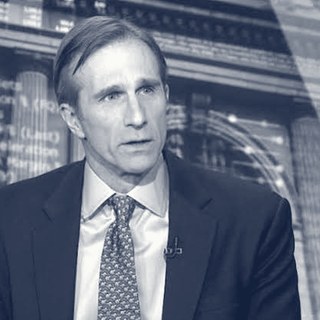 Stuart Kaiser · Citi · Fox / Citi
S&P 500 since this was said: ▲ +1.2% · 7,501 → 7,592 · as of 2026-09-10
Mixed
Favorable now, but an abrupt bear-market-like change later in 2026
Tom Lee · Fundstrat Global Advisors · CNBCS&P 500 since this was said: ▲ +1.2% · 7,501 → 7,592 · as of 2026-09-10
Neutral
Asked if he loses sleep over seven companies dominating the S&P 500. He calls it 'the antithesis of what you're supposed to be getting' @20:25 and says index holders 'really don't have the diversification that they think they have and if they really want it They probably have to explore alternatives' @20:40.
“I don't think it's healthy. I don't think it's you know, I but there's been so much written about it”
S&P 500 since this was said: ▲ +4.5% · 7,267 → 7,592 · as of 2026-09-10
Bearish
Todd 'Bubba' Horwitz tells Kitco the current decline is the usual midterm-election-year selloff and it is now under way.
typically between this time of year in a midterm election, there usually is a pretty solid sell off. And I think we're seeing it.
S&P 500 since this was said: ▲ +2.8% · 7,387 → 7,592 · as of 2026-09-10
Bullish
Todd 'Bubba' Horwitz tells Kitco he is buying the main indexes (SPY, QQQ) right now and is always 100% long the market as an investor, hedged with derivatives.
Right now, I'm buying the main indexes to spy the cues. There are things that I would look to buy, but I'm buying those right now because I always want to be, I'm always 100% long the market from an investing standpoint.
S&P 500 since this was said: ▲ +2.8% · 7,387 → 7,592 · as of 2026-09-10
Bullish
Todd 'Bubba' Horwitz tells Kitco the market will go down but recover, and US stocks will be higher than today in 10 years.
And the probability model says that this market will go down, but it will also recover. And 10 years from now, we'll be higher than we are today.
S&P 500 since this was said: ▲ +2.8% · 7,387 → 7,592 · as of 2026-09-10
Bearish
Michael Oliver tells Kitco the S&P 500 has been in a topping process for more than a year.
Our technical work says that the stock market has been in a topping process for a year, more than a year.
S&P 500 since this was said: ▲ +2.8% · 7,384 → 7,592 · as of 2026-09-10
Bearish
Michael Oliver tells Kitco the S&P 500's downside trigger levels beginning next quarter are just below 7,000, around 6,800.
And the trigger levels beginning next quarter are likely to be somewhere not far below 7,000, like 6,800.
S&P 500 since this was said: ▲ +2.8% · 7,384 → 7,592 · as of 2026-09-10
Bearish
Peter Schiff tells investors to sell into any real US stock rally because the falling dollar makes the gains nominal only.
And if you've got a real rally in the US stock market, sell into it.
S&P 500 since this was said: ▲ +22.3% · 6,205 → 7,592 · as of 2026-09-10
On the scoreboard
Voices in this debate who also have scored calls on the ledger.
Head to head
Pick any two voices in this debate; their freshest claims go side by side.
Follow The S&P 500
One short email when this debate moves: new calls, reversals, verdicts. Plain words, free.
Before you trust the call, check the record.
We write down what public figures predict, in their exact words, and check the result when the deadline arrives. Every line links to its source. How we score · Corrections · The scoreboard · The data
© 2026 Pundit Rumble · independent and unaffiliated · updated every market morning · not investment advice.
We write down what public figures predict, in their exact words, and check the result when the deadline arrives. Every line links to its source. How we score · Corrections · The scoreboard · The data
© 2026 Pundit Rumble · independent and unaffiliated · updated every market morning · not investment advice.