AI Winners & Chips
75 bullish · 32 bearish · 24 neutral · exact words, dated and sourced




 +62
+62If AI wins, who gets paid? Chips, memory, and the picks-and-shovels argument.
The count, last 30 days: 23 bullish, 8 bearish. The tape leans bullish. A count, not a verdict.
The tape
Jul 06
Jul 13
Jul 20
Aug 03
Aug 10
Sep 07
bullishbearishclaims filed per week
What the people who move markets are saying about this, in their own words. These are views on the record, not scored bets: when a call here grows a number and a deadline, it moves to the scoreboard. Newest first.
Bearish
Richard Windsor says Apple Intelligence has so far been an abject failure and Android with Gemini offers a vastly superior AI experience; Apple must fix AI to earn his confidence.
This has been pretty much an abject failure. And by all accounts on Android with Gemini the AI experience is vastly superior.
Bullish
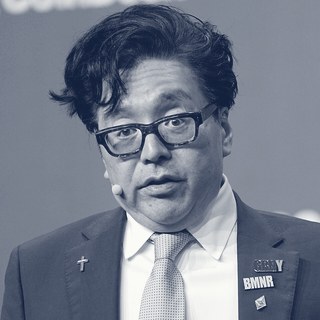
Tom Lee says software and the Mag 7 will be big downstream beneficiaries of AI.
you need to look at downstream ideas and that's software companies. It's the Mag 7. You know they're going to be really big beneficiaries of A.I.
Bullish
Singh says the personal AI agent category (Meta's new product) will be huge given Meta's distribution and stored compute
The personal agent category is gonna be huge.
Bullish
Rhee calls the chip supercycle a blessing for Korea if it lasts 5-10 years, flagging concentration and geopolitical-windfall risks
It's a blessing. If the supercycle continues more than five, 10 years, definitely they'll help.
Bearish
Rhee warns Korea's chip advantage could erode quickly if China gets lithography tools or the geopolitical situation changes; conditional
But if the geopolitical situation changes or if the Chinese producers can have the ability to make this lithography equipment, the situation can change very quickly.
Bullish
Masahiro Wakasugi (Bloomberg Intelligence) says TSMC/Samsung high-NA EUV commitments boost ASML revenue and profit from 2028-2030 with 40-50% higher tool prices
So ASML's new high-end EUV tools will have probably 40 percent or maybe 50 percent higher price tag. So maybe they're boosting the revenue and the profit even though it should be like twenty twenty eight nine thirty or a little bit mid-term.
Bullish
Bradley Tusk tells CNBC he is actively investing in the best AI companies in every sector and advising them to welcome regulation.
and this is a lot of investing I'm doing right now, which is I'm trying to find the best companies in every single sector in AI
Bullish
Neil Campling (Bloomberg) says Samsung and TSMC adopting ASML's $400m machines is clearly positive for ASML and the chip-equipment cycle.
these advances are clearly definitely positive news for ASML and the whole chip equipment cycle I'd suggest.
Bearish
Peter Schiff, asked which Mag 7 name to avoid, picks Nvidia as pretty expensive while admitting he has not looked closely.
Invidia, I guess, is in there, right? I think that one is pretty expensive.
Nvidia since this was said: ▼ -3.3% · 225.7 → 218.4 · as of 2026-09-10
Neutral
Booth says AI will have a huge impact with big winners and losers, but picking which is which is very risky, so own all of them.
With AI, it's going to have a huge impact. We all agree with that. And with that, just basic economics 101s tells you that there'll be big winners and big losers and trying to figure out which one's going to be which I think is very risky.
Neutral
Greg Brockman (OpenAI president) says OpenAI's executive turnover is not atypical; departures only look dramatic because the company is in the spotlight.
So every departure gets scrutinized in a way that it doesn't otherwise. I actually don't think that it's actually that atypical.
Bullish
Cindy Park (Nomura) says Chinese memory competition (CXMT) is not a near-term risk to Samsung and SK Hynix because memory is in shortage.
So at this point, we don't think that that's a near-term risk, moreover, because the supply for memory is in shortage right now.
Bullish
Tim Waterer (KCM Trade) is bullish on chip manufacturers through the end of 2027 on full order books and calls pullbacks buying opportunities.
So I think in the here and now, I think through 2027, I think the chip names are still looking pretty good.
Nasdaq since this was said: ▼ -2.4% · 26,729 → 26,082 · as of 2026-09-10
Neutral
Matt Bloxham (Bloomberg Intelligence) tells Guy Johnson that OpenAI has had to accelerate its enterprise pivot because Anthropic, with its enterprise focus, has overtaken it.
OpenAI has had to kind of turbocharge its development path this year because it's been overtaken by Anthropic. The difference there has been this focus on enterprise
Neutral
Matt Bloxham (Bloomberg Intelligence) tells Guy Johnson China has a big development gap versus AMAT/ASML-level fab equipment and a narrower gap at the model and chip level.
there's a big kind of development gap more much more the model and perhaps even at the kind of actual chip and there's a narrower gap but they're still heavily reliant on European and US technology for the actual kind of fab stuff
Bullish
Rob Sanderson (Loop Capital) says Fiji Simo's unplanned departure leaves a hole but OpenAI's deep bench and talent pull mean the company will be just fine.
They have a very deep bench and they've got, I think, a lot of resources and they're obviously a huge magnet for talent across the tech sector, so I think they'll be just fine.
Neutral
Rob Sanderson says it is premature to suggest OpenAI needs a leadership change at the top given its capital, profile and product success.
I think it's very premature to make a suggestion that there needs to be a leadership change up top.
Bullish
Kim Forrest of Bokeh Capital tells Bloomberg that Sandisk's long-term contracts partially fix the NAND boom-bust cycle, which is good for investors.
And while I don't think it's a huge you know a complete fix it's on the road to being fixed with these contracts. So I think that is a really great thing that's coming out of this right. We're not just going to be whipsawed as events as investors anymore.
Bullish
James Kisner (Water Tower Research) says OpenAI's $40B revenue run-rate is somewhat encouraging for AI demand, especially its traction in coding.
I think it's somewhat encouraging. I think we all have expected that Open AI would be growing.
Neutral
James Kisner says enterprise share is the real prize and Anthropic currently leads on benchmarks and pricing power versus OpenAI.
I think the enterprise is ultimately the real prize. And anthropic also has the leaderboard in terms of performance on a lot of benchmarks. I think that Opus 5 and Fable are still considered the gold standard
Neutral
James Kisner says open-weight models are here to stay after Kimi K3 matched frontier performance; the genie cannot be put back in the bottle.
like whether you like it or not. Open-way models are here to stay. And a lot of industry folks have come out saying that we shouldn't discourage that.
Neutral
James Kisner says there are legitimate questions about whether frontier-model moats and pricing power are sustainable given cheap competitors and monthly lead changes.
I think there's a lot of legitimate questions about like what the sustainable mode is, you know, for a frontier model.
Neutral
Gavin Baker tells Calacanis Anthropic is probably losing share on the margin to OpenAI, open source and Grok, yet still growing exceptionally because the AI pie is exploding.
probably on the margin, Anthropic is losing share to open AI, to open source and to rock, and they're still growing so fast.
Bullish
David Sacks tells Calacanis Anthropic's pricing power may be sustainable because a meaningful subset of customers will pay a premium for frontier intelligence, as long as it stays in the lead.
So now look, I actually think that their pricing power may be quite sustainable, because I think people are willing to pay not the whole market, not the whole market, but a decent subset of the market is willing to pay a premium for true frontier intelligence.
David Sacks · Craft Ventures / All-In Podcast · https://www.youtube.com/watch?v=kVzYGVJ8zUk @44:07 ↗Neutral
Gavin Baker tells Calacanis and Sacks a plausible end state is frontier models taking 65-85% of AI token economic value while open-source models carry ~80% of volume.
And I think a very plausible outcome is one of which frontier tokens are 65 to 85% of the economic value. Open source tokens are like 80% of the volume.
Bullish
Jason Calacanis guarantees to Baker that Zuckerberg/Meta will have the best open-source model within a year.
He's going to be the open source hero from America. He is going to have the best open source model in the next year. I guarantee it here on the online podcast.
Bearish
Gavin Baker tells Calacanis he leans to the under on Zuckerberg/Meta having the best open-source model within a year, floating Nvidia as an open-source contender.
I might take the under, and there's another American hero, Jitson Wang, and you might see NVIDIA at the open source frontier.
Bullish
Gavin Baker tells Calacanis that Grok 4.6 is a relatively small 1.5T-parameter model and a significantly more capable Grok 4.7 is due within weeks.
a larger model, Grok 4.7, that should be significantly more capable, is coming out in a few short weeks.
Bullish
Chey Tae-won believes Nvidia stays dominant in AI given its technologies beyond GPUs and its ecosystem building.
So I still believe that in the future, so they are dominant and they actually had a lot of technologies, not on just GPU side.
Nvidia since this was said: ▼ -3.1% · 225.3 → 218.4 · as of 2026-09-10
Neutral
Dan Ives (Yorkville Ives) tells Bloomberg Radio that for the first time in 30 years the US is ahead of China in technology.
And the reality is, for the first time in 30 years, the US is ahead of China when it comes to tech.
Bullish
Dan Ives says counting China out of the AI race is the wrong bet, citing its lead in nuclear energy and robotics, and argues US chipmakers must keep selling into China.
So I think, as someone that might have spent so much time in the region, it's one like counting them out is the wrong bet.
Bullish
Dan Ives says physical AI (robotics, autonomy) is the golden goose and the biggest eventual monetization piece, with agentic AI a highway toward it.
I've always viewed physical AI as sort of the golden goose
Bullish
Howard Lutnick tells Kudlow he is not worried about China's subsidized robotics: US will lead in AI and robotics and build the factories at home.
So I am not worried about this at all. American ingenuity in AI is leading the day. American ingenuity in robotics will run the day.
Bearish
Roger McNamee (Elevation Partners) tells CNBC that Zuckerberg's manifesto is PR and Meta is not well positioned in AI.
He's trying to both create the illusion that meta is well positioned in AI, which I do not think is the case.
Bullish
Chad Dillard (Bernstein) tells CNBC Power Lunch Quanta Services is the 800-pound gorilla in high-voltage transmission and Eaton is well positioned for 800-volt data centers.
They're an 800 pounder gorilla, basically in the room. But you've also got Eden as well.
Bullish
Chad Dillard (Bernstein) tells CNBC the opportunity is massive and investors should own the companies solving the power and labor bottlenecks of data-center construction.
the quantum of opportunity is absolutely massive. And we're still, you know, short labor, we're still short power.
Neutral
Mike Pyle (BlackRock) tells CNBC that evidence of AI-driven productivity gains is only fragmentary so far and more is needed before confidence that the payoff is coming through.
I think you can see fragments of evidence of productivity increasing
Neutral
Dan Niles cites Google's (cloud) revenue growth accelerating from 63% to 82% last quarter as evidence the AI trade has fundamentals.
And if you look at Google, revenue growth accelerated from 63 percent to 82 percent.
Bullish
Mitchell Green says giant AI-leveraged businesses nobody is talking about yet will emerge over the next 5-20 years, with coding only the first category.
I think you're going to see giant businesses come out over the next five to 20 years leveraging AI that we're not even talking about right now.
Bearish
Mitchell Green expects AI token prices to fall dramatically over time and probably become commoditized as open-source inference (Fireworks, Base10) spreads.
we think over time, token prices are going to come down over time, fall dramatically. Will they become commoditized? That's the million dollar question that nobody knows. We tend to think they probably will
Bullish
Mitchell Green says Google is probably one of the best-positioned companies in the AI race because of its cash machine and its training data (Gmail, YouTube, search).
we think Google is probably one of the best business companies in the planet in the AI race because they have a cash machine and they also probably have the best training data in the world
Alphabet since this was said: ▼ -3.2% · 343.5 → 332.6 · as of 2026-09-10
Bearish
Paul Meeks (Freedom Capital Markets) tells Bloomberg that Nvidia's Groq-based inference may be 'good enough' to compete with Cerebras' superior chip, a risk to Cerebras.
But Nvidia through its relationship with Grock that's Grock with a queue has maybe it's not as good of capabilities as Cerebrus but maybe it's good enough.
Bearish
Paul Meeks (Freedom Capital Markets) tells Bloomberg that OpenAI has clearly lost business momentum to Anthropic, so OpenAI partners such as Cerebras now trade at a discount.
You're getting a black eye because open A.I. has lost some business momentum clearly to anthropic
Bullish
Bob Greifeld (Cornerstone Financial Tech Management) tells CNBC that over the next decade the 7.6 billion phones in people's hands will run LLMs/SLMs on-device, making edge computing a real player against data centers.
so over the next decade you're going to see edge computing be a real play in the race so certainly in the next number of years.
Neutral
David Sacks tells Fox Business Anthropic is growing from about $10bn a year of revenue to over $100bn of revenue this year.
Anthropic is growing from something like $10 billion a year of revenue to over $100 billion of revenue this year.
Bullish
X. Eyee tells CNBC that Meta open-sourcing its frontier model is a great step for America and more US companies will follow suit.
Our models is a great step forward for America and we're gonna see more companies follow suit.
Bullish
George Arison tells Bloomberg AI will ultimately be a big benefit to dating products like Grindr by enabling better matches across a wider geography, with some growing pains.
So I think AI is going to be ultimately a big benefit to products like us.
Neutral
Bloomberg The China Show; notes memory buyers pushing back on pricing despite HBM booked out past 2027.
But there is some pressure from consumers of memory on pricing.
S&P 500 since this was said: ▼ -2.1% · 7,758 → 7,592 · as of 2026-09-10
Neutral
Bloomberg; Sandisk best S&P performer YTD paired immediately with guidance concern.
that Sandisk is the best performing stock in the S&P 500 year to date, up nearly 500%,
S&P 500 since this was said: ▼ -1.5% · 7,710 → 7,592 · as of 2026-09-10
Bullish
Opening of CNBC interview after AMD Q2 results; host notes stock has far exceeded Nvidia's this year but is down today on profit taking.
And yeah, it was a very strong quarter for us. We grew revenue over 50% year on year, and we're seeing just tremendous momentum, especially in our data center business, where folks need a lot more AI compute, and we have some great products coming.
S&P 500 since this was said: ▼ -1.7% · 7,724 → 7,592 · as of 2026-09-10
Bearish
KOSPI a pure-play memory story; hyperscaler capex restraint would confirm the peak.
if I talk about the memory segment in itself I do think that there is a risk of a cyclical peak here especially because supply is catching up in a big way.
S&P 500 since this was said: ▼ -1.7% · 7,724 → 7,592 · as of 2026-09-10
Bullish
Beat-and-raise on data center chip demand; margin up 400bps to 23 percent. EVENT: will, dated November results.
in terms of revenue we are expecting a steep much stronger than seasonal final quarter we expect a growth of 13% quarter over quarter 19% year over year to 4.7 billion
S&P 500 since this was said: ▼ -1.7% · 7,724 → 7,592 · as of 2026-09-10
Bullish
AI datacenter to 2.5bn-plus next year, the plus material; biggest growth driver in company history. EVENT: will, dated.
we have already given a guidance which is pretty rare for the next year which stands at 2.5 billion plus as AI data center revenues so this is a very strong growth driver and I do not want to give now out a new number for 27 we will do that in the full year guidance in November but I can tell you today the plus behind the 2.5 will be material
S&P 500 since this was said: ▼ -1.7% · 7,724 → 7,592 · as of 2026-09-10
Bearish
Retail, in his words, came down with the semiconductor bug and piled into levered semi ETFs @2:59, changing price elasticity. Warns retail is now dollar-cost averaging into losses and that capital 'is highly likely to be ultimately lost into the institutional harvesting world' @4:09, with semis behaving 'very much like meme stocks' @4:26 and Korea moving to ban the products.
“it contributed, my estimate is, to between 30% and 50% of the total rally that we saw in semiconductor stocks was not tied directly to the behavior of the fundamentals”
Bearish
Trade barriers 'caused China to expedite investment into this sector' @5:59, and he analogizes to solar, aluminum and steel. Adds 'it becomes easier to become bearish in this space' on fundamentals @6:23, though the passive bid 'is likely to keep it elevated' until employment or demographics turn @6:28.
“This is going to ultimately be a sector where Chinese production is going to drive prices far lower than most Western investors are ever anticipating.”
Bullish
After record Q2 profit, raised gross-margin and full-year revenue outlooks, and an additional $100B for Arizona (total $265B, 10 US fabs): 'we have very strong conviction on the AI mega trend' @34:50; 'as long as we believe the business opportunities are there, which we do, we will not hesitate to invest in the CAPEX' @35:53; 'we do not intend to leave any food on the table to anybody else' @92:53.
“Our long-term financial goal that we promise to the shareholders is gross margin 56% and higher through the cycle, and please”
Bearish
He hedges the near term: 'they are very large models which require a lot of HBM upfront. So for the moment, the HBM market looks very stable' @3:15, but warns Chinese innovation is pushing demand 'towards the DDR5 or the DRAM market where China is more competitive and China can bring on more capacity to bear' @3:25, calling that capacity 'the new touch point for markets on the memory trade in the days to come'.
“On memory, the efficiency of memory is a clear negative to the kind of ongoing kind of bull market in memory”
Bearish
Stockton says downside leadership is localized to semis/AI, the AIQ ETF is down ~19% from its high near additional support, and momentum loss began in June with SK Hynix and Micron the biggest weights.
“we're looking for maybe a few days of stabilization that could give people a chance to kind of regroup and decide which names they might want to reduce exposure to as they bounce.”
Bearish
Citing last week's BofA fund manager survey showing long-semis as the most crowded trade, after the SOX's worst week since liberation day and a ~17-20% drawdown into bear-market territory ahead of Alphabet/Tesla earnings.
“And the most crowded trade is guess what long semi so I think this is definitely a vulnerable trade Especially this week”
Nasdaq since this was said: ▲ +2.2% · 25,508 → 26,082 · as of 2026-09-10
Bullish
Answering the host's challenge that if models can be built for a lot less 'that's a different game too'; he grounds it in inference efficiency and capability: 'for a lot of tasks it turns out these frontier models from open AI and anthropic are actually just better than these open weight models' @2:19 and '5.6 is leading by most of these metrics' @4:47.
“the frontier labs are still far ahead uh here and i think that's really where the value is going to accrue”
Bearish
Cyclical/bubble analog; 'this time is not different'.
“The semis eventually will see downside of as much as 75%.”
Bearish
Taiwan Semi guided margins lower; 'the trade is already cracking'.
“I am relatively confident, high probability that the top is in for the cycle of these.”
Bullish
'So the semiconductors are going to be fine, but memory is the place that I'm going to be focused on.' @6:33. Thesis: memory capacity wasn't built for seven years while Micron's stock went nowhere, so supply can't meet exponential token demand. Disclosure: 'I even started to buy a little bit of Micron this week and some of the semis. Micron, I have a position again.' @34:45: re-entering at prices above where he sold.
“I think memory is the most important part of the AI trade.”
Bullish
On the Gemini delay: 'I don't think it's too serious' @2:21; 'a lot of people had written Google off... But that's not been the case. So I think, you know, Google is going to continue to be a strong player' @3:15-3:25.
“I think we will see Google come out with this product relatively soon. And I think it's going to be competitive enough to keep them in the mix with open AI and anthropic.”
Alphabet since this was said: ▼ -4.1% · 346.8 → 332.6 · as of 2026-09-10
Bearish
Speaking of the ~12-15 high-quality semiconductor names Oxbow follows; 'we think by and large they're overvalued' @5:57 applies to the near-half of S&P market cap viewed as AI beneficiaries. This is the title's '40% downside' warning; Oxbow requires projected downside of 20% or less to buy, so they own none.
“we would say they're overvalued on average and they're projected downside uh in just a typical 20 25 percent bear market for the index would be 40 downside for the semiconductors from today's prices”
Nasdaq since this was said: ▲ +2.2% · 25,520 → 26,082 · as of 2026-09-10
Neutral
'flaw' = 'floor' (garble). SOX ~17% off its June high. Earlier: semis' earnings power 'remains absolutely rock solid' (@15:56) but hyperscaler capex guides 'need to go higher' (@17:16) - 2026 AI capex estimates already moved from ~$500B to ~$700B for the big five (@17:23-17:33), underpinning ~100% semi earnings-growth expectations. Teaser duplicate at 0:24 and 14:59; in-context occurrence filed.
“seeing a sharp reversal, this to me is a healthy correction. But it only finds a flaw once we get that confirmation that CAPEX plans are not just on track, but can continue to push higher”
Bearish
Prompted by 'headlines over the past 24 hours around the progress that Chinese models are making' (@19:10): hardware names that 'can't compete on price' must 'compete with a top tier product' (@19:24). The vulnerability sits with semis that 'aren't the biggest and best or indeed aren't the cheapest' (@19:01).
“you still have to be focused on an up in quality approach because it's the mid tier that looks most vulnerable to disruption coming out of China”
Bullish
Asked to compare the K3 selloff to the DeepSeek moment; his firm's real-time checks back the call: after DeepSeek 'our GPU availability data at 314, it plunged and it gave us a lot of conviction to step in and buy that dip' @3:59, and he expects GPU rental rates 'robust and strong as they've been this year' @4:21.
“Our base case is that we will follow a deep seek like path out of this. That is the base case.”
Bearish
Asked whether he would put new money into semis after they 'roll over in the last couple of sessions'; he notes 'still they are up by 50, 75% for the year to date' @3:38 as the reason for caution.
“that would still prompt me to be cautious as far as putting money into semiconductor stocks. I'm a very conservative bet. Maybe I'd like to see those share prices drop lower before I went ahead and bought semiconductor stock shares.”
Nasdaq since this was said: ▲ +2.2% · 25,520 → 26,082 · as of 2026-09-10
Bullish
Answering 'Is there any crack in this story?' after TSMC raised 2026 revenue growth guidance to 40%+ in USD terms vs the market's ~35-36% @7:10-7:17. He flags 'token maxing' - enterprises 'burning through their budgets quicker than they thought' @8:24 - as the risk that could 'take the shine of some of these capital spending plans' @8:40. In his second hit he notes hyperscaler capex over $700 billion this year with the market 'already expecting that to go to $900 billion or more next year' @24:47.
“I think right now, no, but I think if there is going to be a crack, it remains this kind of theme around the sustainability of enterprise demand.”
Bullish
Calls TSMC 'really a toll road on all the spending... from the hyperscalers' @2:26 and says its raised capex guidance 'does suggest that the AI build out is continuing' @2:41, while noting chip valuations are 'priced to really perform' @3:38 and investors now demand ROI on Mag 7 capex.
“We're looking at the hyperscalers versus the semiconductors. I think both are going to be favorable investments long term. But over this next earning season that's coming up, you may get an opportunity to buy during some of this volatility.”
Bearish
Asked what to sell to fund large-cap tech: 'a lot of these memory names that have rallied a lot, like the Sandix and the Microns of the world, I'm not saying that there's an imminent crash coming' (@3:37; 'Sandix' = whisper garble of SanDisk).
“but I don't think you're going to perform better in those names over the next three to six months than you would in the large cap tech names that lag because of those stocks.”
Bullish
Attributes the sell-off to washed-out traders: 'triple levered positions... retail margin... loans in Korea and Taiwan that fueled this trade' (@39:49); SOX 'still up something like 80 percent year to date' (@41:45); adds a next-day call: 'I suspect we'll probably see something positive about Taiwan semis tomorrow' (@40:30).
“On the other hand, I don't think the fundamentals for the chip trade have changed at all. In fact, I think they've actually strengthened and you see that from the likes of ASML.”
Nasdaq since this was said: ▼ -0.7% · 26,269 → 26,082 · as of 2026-09-10
Bearish
Replayed clip from her interview the previous day (7/14): tech overall has 'improved basically back to neutral just given some of the carnage' (@63:37) and communication services has 'frankly... better valuations' (@63:33).
“and semi valuations which had gotten pretty expensive. They're not super cheap yet. They may still have more to go. I want to be clear about that.”
Nasdaq since this was said: ▼ -0.7% · 26,269 → 26,082 · as of 2026-09-10
Bullish
Same-day rating action: tech to overweight, comm services to market weight
“comm services is a sector that has a lot of tech in it and so we had preferred that area and we're switching it up today.”
Nasdaq since this was said: ▲ +0.8% · 25,873 → 26,082 · as of 2026-09-10
Bearish
A caution INSIDE her bullish tech upgrade, not a bearish tech call (meaning-verified)
“we've had some concerns about the semis. And what I found in my recent marketing is that, you know, the valuations have come down. I don't think that problem has been fully resolved. A lot of the hedge funds, it's come down enough for them.”
Nasdaq since this was said: ▲ +0.8% · 25,873 → 26,082 · as of 2026-09-10
Bullish
X post relayed by CNBC's Kate Rooney (conduit); first clause is her paraphrase framing, tweet quoted after; the 'most reliable way' line is sarcasm (meaning-verified)
“the benchmarks suggest they do have the best model in the world right now. But the most reliable way to tell that is that Elon is obsessed with me again.”
Bullish
His stated non-consensus view
“So I think there's a chance that over the course of the next two to three years, as we take on much more complex agentic tasks, that the distance between the frontier and everybody else doesn't converge, it actually extends”
Bearish
Arguing closed frontier models are winning enterprise
“I think that open source went from 19% last year to 11% this year. So open source, as a share of enterprise spending is actually decreasing.”
Bullish
“anyone who's saying that these close models are gonna lose or are somehow losing, you're just not seeing it in the data”
Bearish
Carving the Mag 7 and chips out of his earnings-season reassurance; 'frothing' is the tape's rendering of 'froth in'
“I did talk about frothing some of the chips. And, you know, we were talking about are these ultimately still going to be commodities in the sense that these margins are not going to hold up.”
Nasdaq since this was said: ▼ -0.8% · 26,282 → 26,082 · as of 2026-09-10
Bullish
Asked on debut day how investors know they are not buying a peak
“Everybody expected more chips. And even I announced that the world we're going to double up our capacity within five years. But, yeah, well, all my customers said that that's not enough, man. And we need more.”
Bullish
Asked about SK Hynix on its debut day; names his memory picks
“It's recommending Micron and we're recommending Sandisk and it is important to see how it trades.”
Bullish
On SK Hynix vs Micron in HBM
“So SK Hynix has told us they have 57 percent market share. So if that is the hot part of the AI market, then they have a much bigger market share than a Micron”
Bearish
On the debut-day pop; 'Eske Heineck's' is the tape's rendering of SK Hynix
“fairly recently is the average South Korean has gone into the lines of credit to buy Eske Heineck's. Now, if that's not top of the market signaling, what is?”
Bearish
On the SK Hynix US debut
“The reality though is that it's coming public at a heightened valuation at a boom time where the madness of crowds from running into this bottleneck when it comes to memory. So this is really perhaps the time to shy away from high momentum stocks that have real kind of frothy expectations.”
Bearish
After his China trip
“We have imposed chip export controls on China to try to hold them back. It hasn't worked. These guys are moving ahead.”
Bullish
He sold his position ~1250 and expects to buy back higher, he says
“I still think you'll see 4000, 5000 in Micron before this is done.”
Micron since this was said: ▼ -0.2% · 979.3 → 977.4 · as of 2026-09-10
Bullish
“but at 950, will it be higher six months from now? Yes, it will. Once we get through two earnings cycle, it will be higher.”
Micron since this was said: ▼ -0.2% · 979.3 → 977.4 · as of 2026-09-10
Bullish
“we know for a fact that the next two years is going to be all about building artificial intelligence infrastructure. And we know for a fact that's going to require a lot of memory chips and a lot of networking chips and GPUs and everything else. Those companies are making out like bandits”
Bullish
S&P earnings growth: consensus 23%, 30% is "absolutely possible"; AI names drive ~60-65% of that growth; rejects dot-com 2.0 framing
S&P 500 since this was said: ▲ +1.4% · 7,483 → 7,592 · as of 2026-09-10
Bullish
“every month that passes, there's a compounding benefit taking place to people who are downstream of AI”
Bullish
Visser says OpenAI is not in trouble because AI adoption is still very early.
Everyone thinks open AI is in trouble. I don't see it that way because we're still in the very early stages of adoption
Bearish
Visser says AI models will be commoditized; the most expensive ones are not needed and corporations have not learned to use them.
And that has always been my belief is that these models will be commoditized that you don't need to use the most expensive ones and that the corporations haven't figured out yet how to use them
Bearish
Visser says he would be shocked if Sam Altman is still running OpenAI within a year.
I, I would be shocked if within a year, if he's still running open AI, that's just me
Bullish
Visser says Anthropic wins the OpenAI-vs-Anthropic battle on enterprise focus, coding and talent.
So I, I just think at the end anthropic is, is, is the winner of that battle from, from my perspective
Bullish
Thomas Laffont tells the All-In Summit that combined OpenAI+Anthropic revenue could exceed AWS by end-2026 and all of Microsoft by 2028 (hedged estimate).
but you can see that we estimate that not only is it bigger than Azure, but by the end of the year it could be bigger than AWS and potentially bigger than all of Microsoft by 2028.
Bullish
Thomas Laffont tells the All-In Summit that Anthropic is scaling faster than any company in the PC, internet or mobile eras.
entropic in particular is scaling like no other company that we've ever seen.
Bullish
Thomas Laffont tells the All-In Summit that the thesis that AI models are commodities has been thoroughly disproven.
I do think that the narrative of, oh, these models are commodities and these companies are going to get... I think that's been pretty thoroughly disproven now, right?
Bullish
AI is third inning, one out; keep owning the chip trade
Dan Ives · Yorkville Ives & Co · CNBCBullish
Beaten-down 'quality losers' will prove they're AI winners and rerate
Bullish
AI value migrates upstream to fabrication and tools, then back to infra/apps
Bullish
Life-science tools are an AI + reshoring winner; CapEx boom in 3-6 months
Bullish
Micron is a gut-check moment; chip demand-supply ~12-15:1, no equilibrium ~2 yrs
Dan Ives · Yorkville Ives & Co · CNBCBullish
Gavin Baker tells All-In that Grok 4.3 sits on the Pareto frontier with Google, OpenAI and Anthropic, and Grok Build closes xAI's harness gap.
the newest version of Grok 4.3 is on the Pareto frontier for all frontier models.
Bullish
Gavin Baker tells All-In that on a like-for-like Western data-center basis Nvidia's AI business is growing faster than Broadcom's, rejecting the ASIC share-loss narrative.
Nvidia's AI business is growing faster than Broadcom's. And faster than a lot of other companies that are seen as part of this ASIC share gain story.
Bullish
Chamath Palihapitiya tells All-In that the domain-specific-accelerator shift he expected after the Groq deal is instead happening inside Nvidia via co-design with every lab.
but the reality is that that DSA market evolution is actually happening inside of Nvidia.
Nvidia since this was said: ▲ +1.4% · 215.3 → 218.4 · as of 2026-09-10
Bullish
Gavin Baker tells All-In that Nvidia trades at a low-to-mid-teens multiple of real (buy-side) earnings, unlike Cisco at 100x in 2000, even though rising rates are concerning.
And, you know, I think Nvidia is probably at a low teens, multiple of kind of, low to mid teens, multiple of real earnings.
Nvidia since this was said: ▲ +1.4% · 215.3 → 218.4 · as of 2026-09-10
Neutral
Marc Benioff tells All-In that selling top chips to China is irrelevant because Chinese models are already as competitive as US models and fast-follow within six months.
I think it's irrelevant at this point. I think that the Chinese models are as competitive as these U.S. models. And they've learned to make these models without having the highest end chips.
Neutral
Chamath Palihapitiya tells All-In the US should sell top chips to China so Nvidia keeps the market and Huawei never gets room to build a competitive chip.
Number two, sell the chips. And the reason we should sell the chips is we want Nvidia to win. We do not want to give enough oxygen for Huawei to then all of a sudden emerge and have a version of a chip that works
Neutral
Marc Benioff tells All-In that Salesforce will spend roughly $300M on Anthropic coding tools in 2026.
Anthropic is awesome. Like I am going to probably use $300 million of anthropic this year at Salesforce coding.
Bullish
Marc Benioff tells All-In that Anthropic is a rocket ship that will not stop, praising its coding agents.
have you seen anthropic? I mean, it is a rocket ship that will not stop because you can use this product to do these incredible, amazing things
Bullish
David Friedberg tells All-In that Google can own the personal-assistant layer via Gemini across Gmail/Calendar/Drive and Apple will have to build or white-label to compete.
But they're gonna be up against a formidable competitor is my point, 'cause I think Google Assistant is gonna end up being kind of a real kick-ass product once they get this flywheel going.
Neutral
Marc Benioff tells All-In that multi-sensory models are the next big wave for AI and LLMs alone will not reach AGI.
So I would say that multi-sensory models are the next big wave for AI. And then, but we're still not at AGI at that point.
Bullish
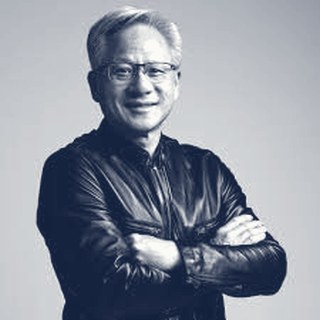
Jensen Huang tells the All-In hosts that adding Groq, Bluefield, CPU and networking racks raised Nvidia's addressable market by roughly a third to a half.
So NVIDIA's TAM, if you will, increased from whatever it was to probably something, call it 33%, 50% higher.
Nvidia since this was said: ▲ +22.3% · 178.6 → 218.4 · as of 2026-09-10
Bullish
Huang tells Gerstner that rival chips cannot compete with Nvidia's pace even if given away free; Nvidia will not lose share to cheaper ASICs/AMD.
if you can't keep up with the state of the technology and the pace that we're running, even when the chips are free, it's not cheap enough.
Neutral
Huang says Nvidia's physical AI business is close to $10B a year and growing exponentially.
It is a multi-billion dollar business for us. It's close to $10 billion a year now. And so it's a big business, and it's growing exponentially.
Nvidia since this was said: ▲ +22.3% · 178.6 → 218.4 · as of 2026-09-10
Neutral
Huang says OpenAI is the most used model category, open source second, Anthropic a distant third.
OpenAI is number one, open source is number two, very distant third is Anthropic.
Bearish
David Friedberg tells Huang that agentic AI is replacing entire enterprise software stacks overnight, as it did at his company.
Honestly, and that's after people are replacing entire enterprise software stacks in a night.
Bullish
Huang argues enterprise software will get 100x more agent usage, the opposite of the view that AI ends enterprise IT.
The enterprise software industry is limited by butts and seeds. It's about to get 100 times more agents banging on those tools.
Bullish
Huang says proprietary model products will keep thriving even if open models reach the frontier.
It is near the frontier, and quite frankly, even if it reaches the frontier, I think that products as a service, world-class products as models as a product is gonna continue to thrive.
Neutral
Huang says Nvidia went from 95% to 0% market share in China under export controls.
Nvidia gave up a 95% market share in the second largest market in the world. And we're at 0%.
Nvidia since this was said: ▲ +22.3% · 178.6 → 218.4 · as of 2026-09-10
Bullish
Huang says Nvidia has approved licenses, Chinese purchase orders, and is restarting its supply chain to ship to China.
Now we've informed the Chinese companies and many of them have given us purchase orders. And so we're in the process of cranking up our supply chain again to go ship.
Nvidia since this was said: ▲ +22.3% · 178.6 → 218.4 · as of 2026-09-10
Bullish
Huang says buying from Nvidia remains one of the most economic choices for hyperscalers as long as Nvidia keeps running fast.
I believe that buying from Nvidia still is one of the most economic things they could do.
Nvidia since this was said: ▲ +22.3% · 178.6 → 218.4 · as of 2026-09-10
Bullish
Huang says Nvidia is gaining market share because ~40% of customers need the full AI-factory stack.
And so they want you to come in with a full stack, and we've got the whole stack. And so surprisingly, Nvidia's gaining market share.
Nvidia since this was said: ▲ +22.3% · 178.6 → 218.4 · as of 2026-09-10
Bullish
Huang says sell-side analysts forecasting 30%/20%/7% growth underestimate Nvidia because they do not grasp the scale and breadth of AI.
they just don't understand the scale and the breadth of AI.
Nvidia since this was said: ▲ +22.3% · 178.6 → 218.4 · as of 2026-09-10
Bullish
Huang says OpenAI and Anthropic will be enormous but the AI industry is far bigger than the labs.
open AI's incredible, they're gonna be enormous. Anthropics is incredible, they're gonna be enormous. But AI is going to be much, much bigger than that.
Bullish
Huang says Amodei's revenue forecast is very conservative and Anthropic will do far better.
I believe Dario and Anthropic is going to do way better than that.
Bullish
Huang says every enterprise software company will become a value-added reseller of Anthropic/OpenAI tokens.
every single enterprise software company will also be a reseller, value-added reseller of Anthropic code, Anthropic's tokens.
Bearish
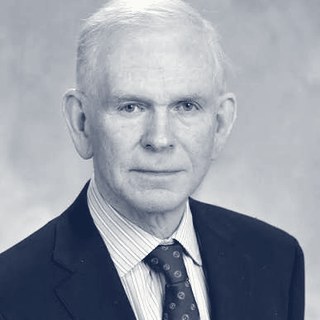
The Mag 7 were seven monopolies; now they fight to one survivor, six of seven lose
Jeremy Grantham · GMO · Diary of a CEOOn the scoreboard
Voices in this debate who also have scored calls on the ledger.
Head to head
Pick any two voices in this debate; their freshest claims go side by side.
Follow AI Winners & Chips
One short email when this debate moves: new calls, reversals, verdicts. Plain words, free.
Before you trust the call, check the record.
We write down what public figures predict, in their exact words, and check the result when the deadline arrives. Every line links to its source. How we score · Corrections · The scoreboard · The data
© 2026 Pundit Rumble · independent and unaffiliated · updated every market morning · not investment advice.
We write down what public figures predict, in their exact words, and check the result when the deadline arrives. Every line links to its source. How we score · Corrections · The scoreboard · The data
© 2026 Pundit Rumble · independent and unaffiliated · updated every market morning · not investment advice.