Global Equities
30 bullish · 11 bearish · 15 neutral · exact words, dated and sourced
 +37
+37Markets beyond the United States: who is buying the rest of the world, and why.
The count, last 30 days: 14 bullish, 4 bearish. The tape leans bullish. A count, not a verdict.
The tape
Jul 13
Jul 20
Jul 27
Aug 10
Aug 17
Sep 07
bullishbearishclaims filed per week
What the people who move markets are saying about this, in their own words. These are views on the record, not scored bets: when a call here grows a number and a deadline, it moves to the scoreboard. Newest first.
Bullish
Wilson says do not cut equity exposure; upgrade it: S&P over foreign markets and quality over low-quality stocks
I don't think people should be reducing their equity exposure. What they should be doing is upgrading the portfolio, which is what we've been doing, which is S&P over foreign markets
Bullish
Bangia tells Bloomberg anchors Korean equities are breaking out on Samsung/SK Hynix buybacks, returning foreign flows and GPT-6 driven semi demand
Korea seems to be bucking the trend, and that's a function of, firstly, Korean corporates are out there buying back their own stock, namely Samsung Electronics and SK-Hynix
Neutral
Homin Lee (Lombard Odier) expects the BOJ policy rate near 2% by H2 2027, roughly four more hikes, a view he says the firm has held since mid-August
So now if you look at the market pricing for the Bank of Japan, it now points to maybe close to 2% by the second half of 2027. So that's roughly maybe four hikes from the current level. And this is what we've been expecting since mid August
Bullish
Gave takes comfort in Korean equities because banks rose 5% while the KOSPI fell a third in July, though adding Korea now adds volatility
So it tells you, I think, that the underlying fundamentals of Korea, when the banks actually do fine, to me, that gives me a lot of comfort.
Bullish
Gave says a resolution in Ukraine or the Gulf could unlock Chinese stimulus and another leg of the 2024-25 China bull market; conditional
If either we get resolution in Russia, Ukraine, or we get resolution in the Gulf, this could open the door for Chinese stimulus and another leg up from the 24 and 25 bull market that started.
Bullish
Peter Schiff says foreign stocks began beating US stocks again last year and an extended period of foreign outperformance is starting.
starting last year, foreign stocks are smoking US stocks again. And so I think we're going to be in another extended period of time where you get outperformance.
Bullish
Peter Schiff says to overweight value over growth and emerging markets over developed markets right now, with an underweight in tech.
But I would look to overweight value over growth and emerging markets over developed markets right now.
Bearish
Trinh Nguyen (Natixis) tells Bloomberg that Chinese onshore corporate earnings are very weak, creating heavy capital-outflow pressure even as the trade surplus needs to be recycled onshore.
the overall picture is that earnings are very weak onshore. And that means there's a lot of pressure for capital outflows.
Bullish
Praveer Sinha (Tata Power CEO) expects India's data-center power demand to grow from 1.5 GW today to about 10 GW by 2030 and 30 GW by 2035, and says utilities can handle it.
With whatever has been announced, we are expecting that this will become about 10 gigawatt by 2030 and about 30 gigawatt by 2035.
Bullish
Cindy Park (Nomura head of Korea equity research) says the July deleveraging was a reset, not a change in fundamentals; KOSPI remains positive on the AI data-center theme and is broadening to financials, defense, autos and healthcare.
So fundamentals for Cosby has not changed. It remains quite positive, driven mainly by the AI data center theme.
Bullish
Cindy Park (Nomura) expects Samsung and SK Hynix buybacks of about 120 trillion won this year and 270 trillion won next year, offsetting foreign selling and structurally supporting KOSPI.
which should amount to about $120 trillion this year, moving on to $270 trillion next year.
Neutral
Rick Rieder (BlackRock) tells Bloomberg the BOJ needs hawkish policy rather than intervention to stabilize the yen and expects a BOJ rate hike in September, or at the latest December.
And I think, you know, I think you're going to see a move in September. Maybe they wait till December.
Neutral
Alice French (Bloomberg Japan equities reporter) thinks a well-telegraphed BOJ hike in September or October should not hurt Japanese stocks much, unlike the surprise in summer 2024.
I think if these rate hikes do come and if they're expected and the market is ready for them, it shouldn't have too much kind of negative impact.
Bearish
Catherine Lim (Bloomberg Intelligence) says JD.com's bullish second-half and 2027 guidance rests on a 'cost mirage' of easier comps and calmer food-delivery competition, so its sustainability into 2027 is anybody's bet.
But a lot of it is what I would call like a cost mirage because, you know, we have a significantly calmer food delivery operating landscape, easier year on year coms
Neutral
Juliana Liu (Bloomberg Opinion) says China's luxury shoppers are back but trading down from handbags and jewelry to premium skincare, cosmetics and sneakers.
Yes, I think there is no other way to put it except to say and to admit that these shoppers are essentially trading down.
Neutral
Jennifer Song (Morningstar) expects Kweichow Moutai to report roughly flat year-on-year earnings tonight amid weak baijiu demand, with any dividend surprise a positive.
So overall, we'll think the earnings to be largely flat compared with a year ago.
Bullish
Jennifer Song (Morningstar) expects Macau gaming revenue to grow single digits in the second half, around 4% in the third quarter, as volumes recovered after the World Cup.
So the overall segment in second half, we will see like single-digit growth, like 4% while growth in the third quarter.
Bullish
Adam Farstrup (Schroders) tells CNBC his multi-asset team has been very long equities for three years and still sees equities driving returns.
And we have been very long equities for the past three years.
Bullish
Max Kettner (HSBC) tells CNBC that the June-July clearing of momentum and tech positions paves the way for more tech exposure, including leaning back into Asian equities, not just the US.
that clearing of momentum positions, that clearing of tech position, the bit of excess leverage taking, really, that should be paving the way for a bit more tech exposure, away also from the US.
Neutral
Nick Leung tells BNN China's macro picture (demographics, consumer slowdown) is weaker than in past decades but its companies are far more competitive and innovative than before.
Now the macro doesn't look as good, but the micro looks much better than it did before.
Bullish
Nick Leung tells BNN China remains a great opportunity for multinationals even though the game has become harder and more competitive.
The game has changed. It's more difficult, it's more competitive, but it's still a great opportunity.
Bearish
Rahm Emanuel tells the All-In hosts China's economy is dysfunctional: a popped property bubble, a flat consumer and an irrational industrial base whose overcapacity is being dumped on the world.
I mean, Xi refuses to deal with the obviously the real estate bubble popping consumer that's flat on their back and an industrial base that makes no rational sense.
Neutral
Rahm Emanuel tells the All-In hosts Chinese automakers are exporting more cars while their profits are down 20%.
their auto industry is now exporting more cars and their profits are down 20 percent
Bearish
David Friedberg tells Rahm Emanuel China is heading to ~8 TW of electricity production while the US sits near 1 TW and will struggle to reach 2 TW by 2040.
I often reference they're on their way to eight terawatt of electricity production. We're kind of sitting around one hovering around one, finding it very hard to get to two by 2040.
Bullish
Mark Cranfield says investor optimism on US and global equities will persist, and only an oil shock back toward $120 would turn people negative on stocks.
It would need a really huge shock from the oil market, probably something like going back to $120 that we saw in March before people start to get really negative on the outlook for global stocks, let alone US stocks.
Neutral
Mark Cranfield says the Bank of Japan needs back-to-back 25bp hikes in September and October before markets take it seriously or the yen finds sustained support, given a ~2% neutral rate versus 1% policy rate.
we probably would need to see 25 plus 25 in a short period of time for people to take the Bank of Japan seriously, that they're trying to get ahead of the inflation situation.
Neutral
Mark Cranfield says the Bank of Japan is behind the curve on sticky core inflation and traders want it to hike more aggressively.
So whichever way you cut it, the Bank of Japan is behind the curve.
Neutral
Minoru Kiuchi tells Bloomberg it is not difficult to secure five trillion yen for the spending plan through revenue/expenditure review and special tax measures without new borrowing.
I think it's not so difficult to secure five trillion yen
Neutral
Chris Kennedy tells Bloomberg his team expects the US and China both to avoid escalation at the upcoming Xi-Trump bilateral, limiting the China lever on Iran.
And we expect on our team that the US and China both want to avoid any escalation.
Bullish
CNH garble; a third of Chinese USD bonds mature within two years
“we expect them to refinance their U.S. dollar bonds by issuing the offshore C&H bonds”
Neutral
contrarian on BOJ hiking further; no internal inflationary forces compel hikes
“the window the ripe window has has long since passed”
Bearish
exclusive data showing months of pullback in China travel and spending
“there's some probably genuine level of demand destruction that is happening that has not yet been picked up”
Bearish
contrarian read on why the China slowdown caps oil despite the war
“this is not covid style demand destruction which is what all the oil analysts are focused on I don't think that's the right lens”
Bullish
On the national team returning to support Chinese stocks after the Star 50 fell 17% last week, plus the Kimi K3 'deep seek moment'. He calls state support 'a fairly positive signal, especially considering, you know, valuations in China. Again, relative to U.S. peers have been so depressed' @60:20.
“We could see this sort of valuation gap that has been pretty persistent for a little while in U.S. markets compared to certainly Chinese markets and those sensitive to China close up a little bit.”
Bullish
Anchor cites BI's call that Hong Kong housing is ready for a sustainable rebound with secondary prices jumping 19% over this year and next @91:11. Wong sees another 4% in the second half after 7% year to date ('to both 11%' reads as 'to boost 11%' this year), on rental growth near 5% a year, student and work-visa inflows, plus a 5% office rent growth forecast for 2026-27 @93:54.
“We run our model and then we come up with the ideas that several major factors also driving the Hong Kong prices to both 11% this year. And then so far, every year today, it's also up about 7%.”
Neutral
Host notes the market is pricing about 40 basis points of BoE hikes despite UK inflation at a 15-month low @1:37. He calls the morning CPI a 'third consecutive downside surprise' about 50bp below BoE forecasts @1:43, and says Bloomberg Economics sees roughly 3% inflation even as US-Iran escalation lifts energy, below the BoE's 3.5-4% danger zone.
“So to me, it does look a little bit stretched, particularly given the fact that, you know, even at the peak of the crisis, the Bank of England's were pretty reticent to be delivering rate hikes.”
Bullish
After a Q1 earnings beat he says last quarter's demand ran '8% plus' @41:51, calls Indian prices 'sustainable' while US and European prices have risen more, and projects raw-material costs easing: 'We would project that the cost would come down in the subsequent quarters' @42:37. Reaffirms capacity expansion to 62 million tons in India (80 million with JVs) by 2032 @44:52. On the Iran war, cost impact was covered by price recovery.
“Our projections are that the steel demand in India will be between 7% to 9% and that is a kind of rate which will be maintained for the medium terms into the next few years.”
Bearish
Asked what concerns him about building biotech companies today, he says companies like his 'would be far more difficult to build today, in part because we don't have an industrial policy, a nationwide commitment to science' @36:40, that the erosion is 'more acute care now over the last two to three years' @37:05 (garbled, likely 'acute here'), and that the slide runs from 'commoditization of pharmaceutical ingredients' to supply chains, clinical trials and 'ultimately to medicines for patients' @38:26.
“I would say that there's a natural competitive advantage that is beginning to be ceded to China for the fact that they've made a deliberate strategic commitment to a policy industrialization”
Bullish
'No such thing as a value trap' @27:16; he says his cheap UK tech holdings keep getting bought out, 'I had like two last week' @23:12 including easyJet, because Americans pay up for names at 'one and a half time sales' @23:36. He hopes new PM Burnham helps but is skeptical of government.
“40% of them will get taken over and you'll capture 40 or 50%. Yeah, and the rest of it will just go nowhere. And be paying your dividend of 3%. Well, that amounts to a 25% annual return.”
Bearish
With Healy just appointed chancellor after gilts closed, implying higher defense spending, and the government cutting taxes on energy bills with funding unclear, he notes UK 10-year yields were 'around about 5% yesterday already' and adds 'in the short term, UK paperwork probably underform that of the US' @1:15 (garble of 'UK paper will probably underperform'), with 'a bit of a runway where... we are going to see more fiscal angst' @1:31.
“And I think if you take that at a time when energy prices are high, that is going to be negative for gilts.”
Bullish
Korea reopening after regulators suspended new single-stock leveraged-ETF listings; 'most of that selling was pretty much done... buy the rumor, sell the fact' @8:33-8:39; markets 'might not finish too badly, providing that we don't get any oil prices that... suddenly jump to $100' @8:25. On the China-AI shock: 'For now, it looks like a knee-jerk reaction' @10:17.
“It's a question now that if you were fortunate enough to be out of this, this is a dip buying scenario for some people.”
Neutral
Stated as conditional on wages: 'if we see that structural tightening in the labor market continuing to feed through to wages' @14:25; she frames the BoJ as heading to 'that terminal rate' for a post-pandemic economy that 'needs an interest rate that is higher than where it was prior to the pandemic' @13:42, with yen at ~162 and June CPI due Friday.
“we're likely to see the Bank of Japan hike twice more, coming to a terminal rate of 1.5% by the end of next year.”
Bearish
Asked about Kimi K3 and Alibaba's Qwen; she adds Korea's near-term shield: Korean technology 'comes with a geopolitical security lens... They are a more secure partner to deal with than China' @17:51-18:01, though that edge 'might deteriorate' over the medium term as China builds trust with the West.
“And we've seen that when China decides to do something, it does a lot of it. We've seen that excess capacity play out in China. We've seen that overproduction occur in China. And I don't think that tech side will be any different.”
Bullish
'That's the reason why we're still keeping a constructive view on the medium term trajectory of the market' @51:52; on valuation: 'now we see forward P multiples trading close to six or seven for some names, and that's quite compelling for the medium to long term' @55:12; memory makers' long-term price agreements and US export controls 'still keep the dominant position for these names' @53:18.
“valuations and the unwind of the leverage trade, maybe the trajectory for the rest of the year, despite the volatility that we see now, is maybe higher before the end of the year.”
Bullish
Confirms the target of roughly doubling defense-and-space revenue from fiscal 2025 to 2030 after Japan lifted its defense-export ban ('this is going to have a very significant business impact' @68:17); separately: 'We hope that by September we'll be able to announce our plan to establish the joint venture' consolidating power chips with Rohm and Toshiba @67:18. First airing of this answer @43:42 is garbled as 'US$800 billion'; the 69:08 re-air gives the correct '800 billion yen'.
“Right now, we're aiming for 800 billion yen by 2030.”
Bullish
He owns EWY for memory exposure: 'Hynex and Samsung make up 50% of the Korean stock market' @4:17, and 'the Hynix Samsung trade through the ETF in Korea is cheaper' than Micron @6:12. Part of a broader push to diversify client money out of North America.
“Yeah, the iShares Korea ETF, I think ticker symbol is EWY. We own it because of two reasons. Number one, it's a backdoor way to play Micron”
Bullish
India's monsoon deficit is 'quite large and some 60 percent of districts have deficient rainfall' @27:21; 'the production of maize is going to be lower, the production of cotton may be lower, and especially pulses and oil seeds production may be lower' @31:08-31:21; overall foodgrain output should hold (only ~5% drop even in the 2015-16 double drought) @30:49-31:02. Distribution of rain 'from now till the end of August' is the swing factor @31:57.
“But I think we will see inflation in pulses, we will see inflation in oil seeds, as I said. And therefore, food inflation may cross 6-7% consumer food inflation.”
Neutral
Also: 'I do not see any increase in the minimum support price' @35:08, though a drought bonus is possible and any rabi hike would stay 'in the range of 3 to 6 percent' @35:25; on fertilizer he sees no crisis: 'I do not think that we are going to have any serious crisis of fertilizers, even in rabi crop' @41:36. Canonical mapped to inflation as nearest existing key (no India topic exists); flagging for topic review.
“So elections are due in several large states in 2027. So I do not think that we will see any serious reforms in agriculture policy.”
Bullish
'if you just take FXI right now, that's up and about to break out over the 50-day moving average after being so bearish while the S&P was making new highs.' @6:44. Framing: China 'does things faster and cheaper' in AI/chips; Nvidia still works with China, which is why it holds up better than other semis.
“And now we're seeing the S&P potentially-- I wouldn't exactly call being down 29 points much of a sell-off, but the potential for it to be topping while China's bottoming is something to watch for.”
S&P 500 since this was said: ▲ +1.8% · 7,458 → 7,592 · as of 2026-09-10
Bearish
Cites 'SK Hynix, their biggest company, has $20 billion in levered ETFs. For comparison, Nvidia has around $5 billion' (@1:49) on a stock a fifth Nvidia's size; but adds 'I don't think that's bearish for US stocks in any way' (@2:18).
“So I think what you're seeing is excessive amounts of leverage coupled with a lot of speculation, a lot of excitement.”
Bearish
On SK Hynix's record 15% one-day drop and Korea's $9B single-stock leveraged ETF boom. He notes margin loans on top of leveraged products is 'leveraged squared' @21:23 and says of the selloff 'big moves make sense, given the volatility you had on the way up and the leverage that we know was in the trade' @17:37. Rising equity funding costs signaled the strain.
“that was a big bell ringing saying, hey, the system cannot accommodate all this demand for leverage on semiconductors. And in particular, these memory stocks.”
Bullish
Lee says AI-infrastructure partners like Korea and Taiwan have higher beta to the AI build and should outperform.
So to me, structurally, it makes sense that some countries should outperform because they might have higher beta to this structural story
Bullish
Peter Schiff tells the interviewer that a US dollar collapse and protracted decline would be a net win for the rest of the world, especially emerging markets.
when the dollar collapses and interest rates and consumer prices surge in the United States and we go into a protracted economic decline, I think that's actually a big win for the rest of the world.
Bullish
Raoul Pal tells Mando that geopolitical moves (Venezuela, Iran, Greenland) are market-negative as noise but net big positives for the structural backdrop of risk assets if they resolve.
But if these things slowly resolve, these are net big positives to the general kind of structural backdrop.
Bullish
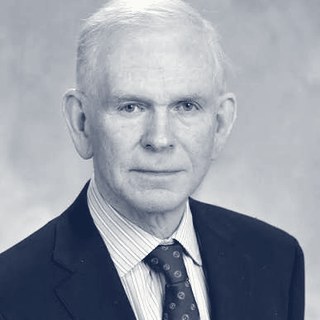
Own equities outside America; they do okay over 10-20 years
Jeremy Grantham · GMO · Diary of a CEOBullish
Peter Schiff says foreign markets are outperforming US stocks and a falling dollar adds to those returns, so investors should move money abroad.
not only are foreign markets outperforming the US market, but they have a tailwind of a weak dollar.
On the scoreboard
Voices in this debate who also have scored calls on the ledger.
Head to head
Pick any two voices in this debate; their freshest claims go side by side.
Follow Global Equities
One short email when this debate moves: new calls, reversals, verdicts. Plain words, free.
Before you trust the call, check the record.
We write down what public figures predict, in their exact words, and check the result when the deadline arrives. Every line links to its source. How we score · Corrections · The scoreboard · The data
© 2026 Pundit Rumble · independent and unaffiliated · updated every market morning · not investment advice.
We write down what public figures predict, in their exact words, and check the result when the deadline arrives. Every line links to its source. How we score · Corrections · The scoreboard · The data
© 2026 Pundit Rumble · independent and unaffiliated · updated every market morning · not investment advice.